
Political Turmoil in Madhesh Province
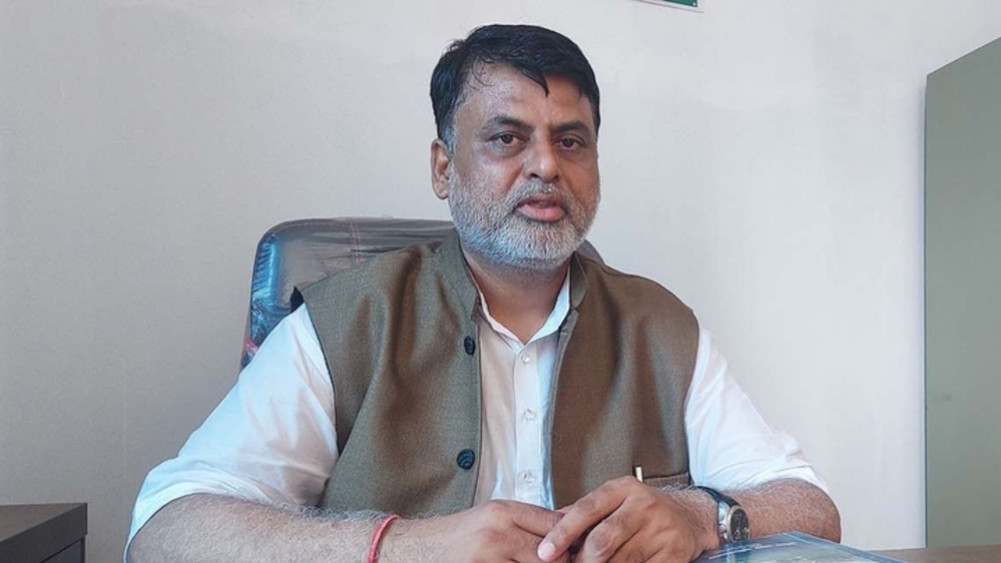
Kathmandu, Nov. 8 — The Madhesh Province government, led by Chief Minister Jitendra Prasad Sonal, collapsed on Saturday, just 25 days after its formation. This occurred after Sonal failed to secure a vote of confidence in the provincial assembly.
Sonal had formed the government on October 15 with the support of 56 lawmakers under Article 168(2) of the Constitution. However, he resigned hours before the scheduled trust vote when it became clear that all his coalition partners would not back him.
Two CPN (Maoist Centre) lawmakers, Rahbar Ansari and Mala Karn, publicly announced that they would neither vote for nor against the motion, effectively abstaining from the confidence vote. Similarly, former chief minister Satish Kumar Singh and lawmaker Tribhuwan Sah, who had earlier supported Sonal, chose to remain absent from the assembly session. The suspension of Janata Samajbadi Party lawmaker Saroj Singh Kushwaha further weakened Sonal’s position.
The chief minister needed 53 votes to prove the majority. As per Article 168(3) of the Constitution, the provincial head will now invite the leader of the largest party in the provincial assembly to form the new government. According to the provision, the provincial parliamentary party leader of the CPN-UML is set to be appointed.
Constitutional Provisions and Political Implications
The constitutional provision stipulates that if a chief minister appointed under Article 168(2) fails to obtain a vote of confidence, the leader of the party with the most members shall be invited to lead the government. Should the next chief minister also fail, Article 168(5) allows any assembly member who can demonstrate majority support to be appointed.
This situation highlights the complex political dynamics within the Madhesh Province. The resignation of Sonal underscores the persistent political instability in the region, where shifting alliances and fractured mandates have led to repeated changes in government since the introduction of the federal system.
Key Factors Leading to the Collapse
- Coalition Support:Sonal’s government relied on 56 lawmakers, but several key allies either abstained or were absent during the critical vote.
- Abstentions:Two CPN (Maoist Centre) lawmakers chose to abstain, which significantly impacted the outcome of the vote.
- Absences:Former leaders who had previously supported Sonal did not attend the assembly session, weakening his position.
- Suspension of a Key Member:The suspension of Saroj Singh Kushwaha further eroded the support base for Sonal.
Future Outlook
With the current government collapsing, the focus now shifts to the CPN-UML, which is expected to form the next administration. This transition will be closely watched, as it could signal a shift in the political landscape of Madhesh Province.
The rapid turnover in leadership reflects the challenges faced by regional governments in Nepal. Political alliances are often fragile, and the ability to maintain a stable majority remains a significant hurdle for any administration.
As the province moves forward, the need for strong, unified leadership becomes increasingly apparent. The path ahead may involve navigating complex negotiations and building broader coalitions to ensure stability and effective governance.