
U.S. President Trump’s Decision to Boycott G20 Summit in South Africa
U.S. President Donald Trump made a significant announcement on the 22nd, declaring that he would not attend the upcoming G20 summit in South Africa. This decision came with a full boycott of the event, as Trump stated that no U.S. officials would participate unless the human rights violations he raised are resolved.
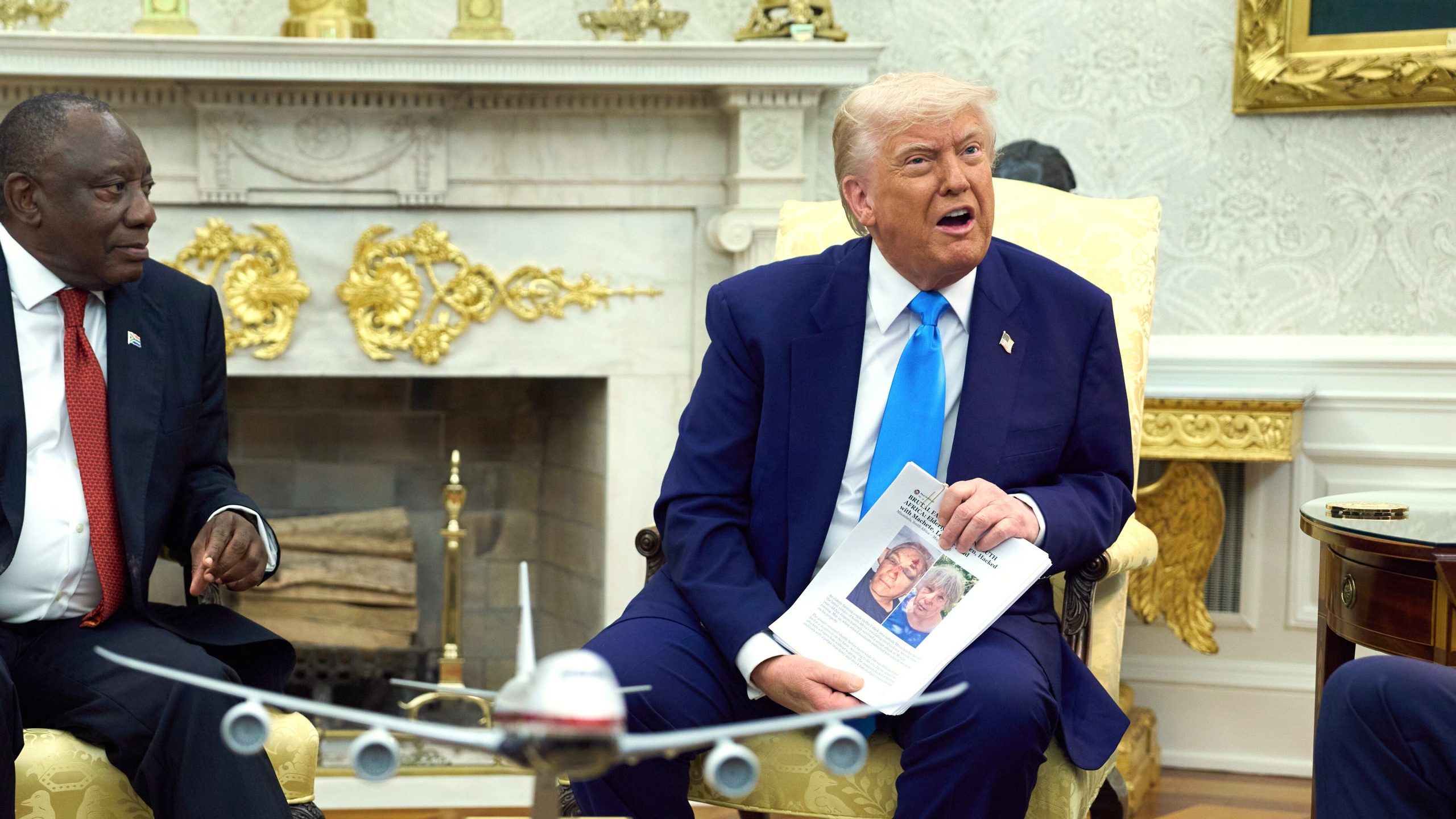
On the 8th, Trump took to Truth Social to express his disappointment, stating, “It is truly shameful that the G20 summit is being held in South Africa.” He added, “As long as human rights violations continue, no U.S. government officials will attend.” Initially, Vice President J.D. Vance was expected to represent the U.S., but this plan was also abandoned. Trump further claimed, “Afrikaners, Dutch settlers, and descendants of French and German immigrants are being killed and massacred. Their land and farms are being illegally confiscated.” This statement echoes his previous concerns about unresolved human rights issues against white farmers in South Africa, which he discussed during a meeting with President Cyril Ramaphosa.
Persistent Claims of Human Rights Violations
Trump has consistently maintained that there are widespread massacres and human rights violations against white people in South Africa, particularly on farms. In May, during a White House meeting with Ramaphosa, he stated, “White people are being massacred in South Africa.” He also shared a video of a rally by black radical left-wing politicians in South Africa, where participants chanted, “Kill the Boers (Dutch immigrants).” In response, Ramaphosa explained that such remarks do not reflect the government’s policy, emphasizing that South Africa is a multi-party democratic country where such statements come from a minority of opposition figures. However, Trump did not accept this explanation.
Political Strategy and Immigration Policies
Recent developments in Trump’s second-term administration have seen an unprecedented move to accept South African Afrikaners as refugees. This has led analysts to suggest that Trump is attempting to appeal to his core support base of white and conservative working-class voters by addressing the issue of “persecution of whites.”
Boycotting International Meetings in South Africa
Trump administration officials have also been avoiding international meetings hosted in South Africa. Secretary of State Marco Rubio did not attend the G20 foreign ministers’ meeting in February, and Treasury Secretary Scott Bessent skipped the G20 finance ministers and central bank governors meeting in July. Their absence was attributed to the perception that the G20’s theme, hosted by South Africa, was anti-American.
Future Implications and Reactions
Earlier, Trump hinted that he would not invite Ramaphosa to the G20 summit scheduled for next year at his resort in Miami, Florida. On the 5th, Trump reaffirmed his decision not to attend the South African G20 summit, asserting, “South Africa does not deserve to be part of the G20.” Since the G20 is not an international organization, there is no formal procedure for expelling member countries, leading to the interpretation that his remarks signaled a boycott.
Conclusion
The implications of Trump’s actions extend beyond the immediate diplomatic tensions. They reflect a broader strategy to engage with specific voter demographics and highlight ongoing concerns about human rights and immigration policies. As the global community watches these developments, the future of U.S.-South Africa relations remains uncertain. The situation underscores the complex interplay between domestic political strategies and international diplomacy.