
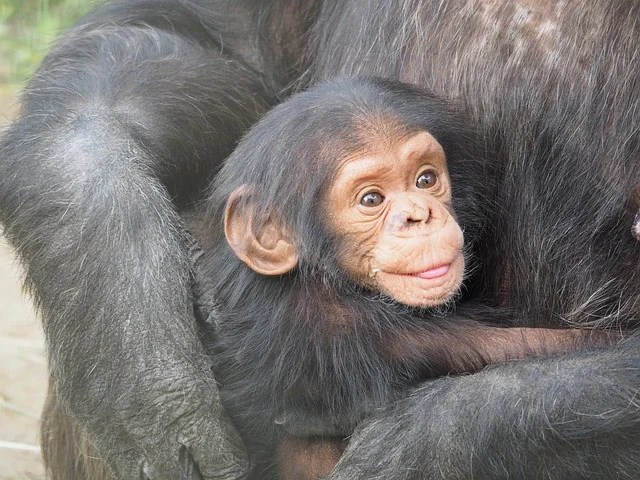
Uncovering the Hidden Healing Behaviors of Chimpez
Animals have always shown remarkable ways to respond to injury, but the discovery of chimpanzees in Kibale National Park using insects on wounds opens a new chapter in understanding their cognitive and social abilities. This behavior, observed on multiple occasions, suggests that these primates may be engaging in something akin to first aid, even if it’s not yet fully understood.
A New Insight into Primate Behavior
In the dense forests of Uganda, researchers have documented chimpanzees applying insects directly to open wounds. The process involves catching an insect, immobilizing it, and then pressing it onto the wound. In some cases, the same insect was used multiple times, indicating a level of intentionality in the action. These observations are particularly intriguing because they show that chimpanzees are not just passive when injured; they actively engage with their environment in creative and potentially helpful ways.
This behavior is not limited to self-treatment. In one instance, an adolescent female applied an insect to her brother’s wound, suggesting a form of care that extends beyond immediate family. Such acts could hint at the early foundations of empathy and cooperation among these animals.
The Possible Medicinal Value of Insects
While the exact function of this behavior remains unclear, there is speculation about its potential medicinal benefits. Many insects produce antimicrobial or anti-inflammatory substances, which could aid in healing. However, scientific testing is still needed to confirm whether this practice actually improves health outcomes for the chimpanzees.
In human traditional medicine, flying insects like honeybees and blowflies are sometimes used for their therapeutic properties. If similar benefits exist in the case of chimpanzees, it could provide further evidence of the evolutionary roots of healing behaviors.
Social Dynamics and Learning
The social nature of chimpanzees plays a significant role in this behavior. Observations suggest that other members of the group often watch closely, showing curiosity and possibly learning from what they see. This raises questions about how such behaviors are acquired: do chimpanzees learn by observing others, or does the behavior emerge more spontaneously?
Additionally, there is the question of selectivity. Are the chimpanzees choosing specific types of insects, and if so, do others in the group also adopt the same preferences? These inquiries highlight the complexity of primate cognition and the potential for cultural transmission within groups.
Implications for Conservation
If insect application proves to be beneficial, it underscores the importance of protecting chimpanzee habitats. These environments not only support the primates but also the insects that may play a role in their well-being. Safeguarding these areas ensures that future generations can continue to study and understand the intricate behaviors of these remarkable animals.
Future Research and Exploration
The findings from Kibale National Park contribute to a growing body of evidence that suggests the roots of care and healing behaviors extend deep into evolutionary history. As researchers continue to explore these behaviors, they may uncover more about the cognitive abilities of chimpanzees and the shared traits between humans and our closest relatives.
By studying these animals, we gain insights into our own evolutionary past and the development of empathy, cooperation, and caregiving instincts. The more we learn, the more we appreciate the complexity of life in the wild and the importance of preserving it.