
South Korea’s Stock Market Surpasses Global Peers
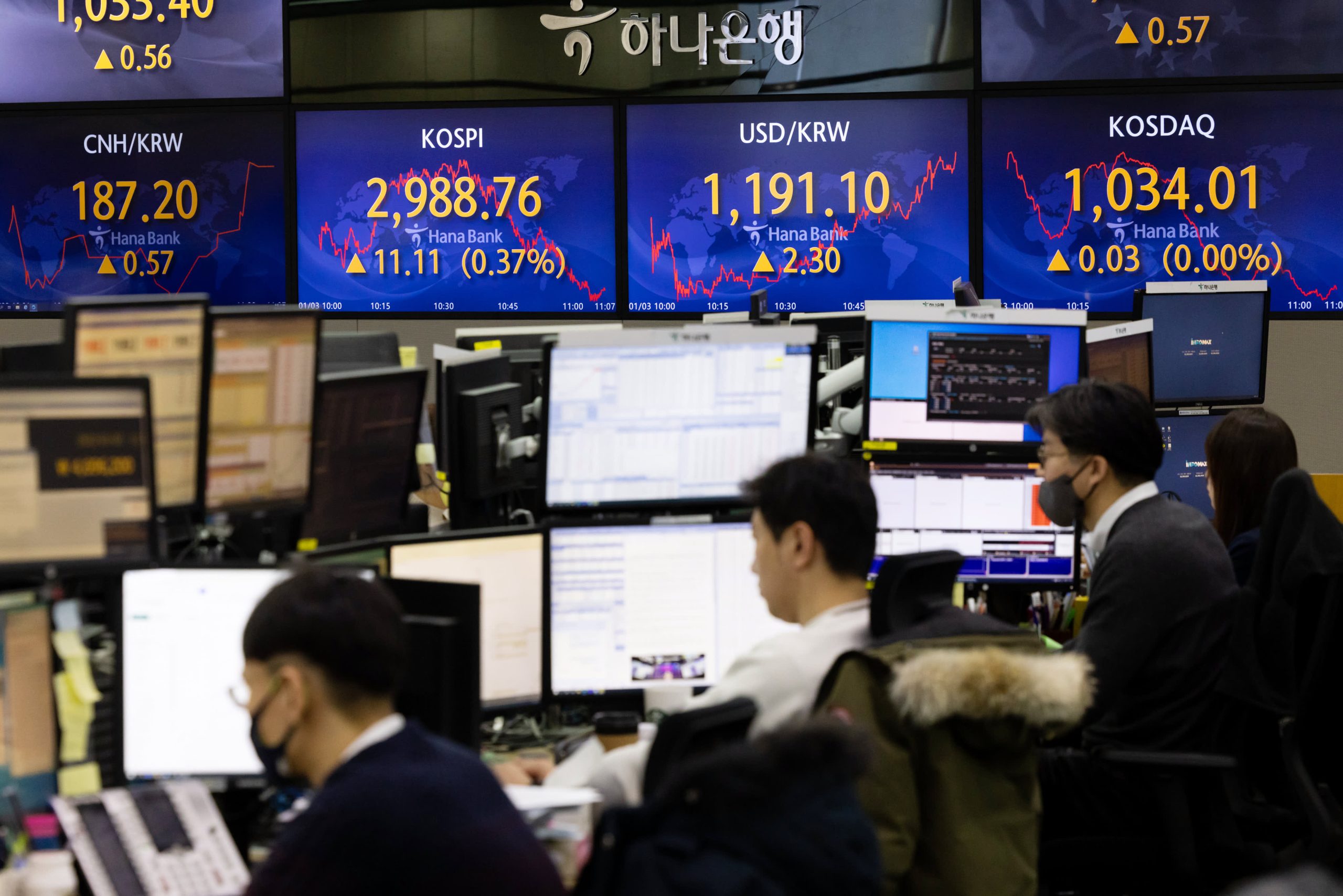
South Korea’s stock market has demonstrated the highest growth rate among major global markets this year. Despite this impressive performance, a peculiar trend persists: domestic individual investors are increasingly directing their capital toward overseas stock markets. This growing interest in international investments is driven by the desire to access high-growth companies, particularly those in cutting-edge sectors such as artificial intelligence (AI), big tech, virtual assets, and quantum computing.
According to the Korea Securities Depository, on the 6th, the net purchases of overseas stocks by domestic investors reached $6.81 billion (approximately 9.86 trillion Korean won) in the previous month. This figure represents the highest level of net purchases since the data collection began in 2011. Specifically, net purchases of U.S. stocks alone amounted to $6.85 billion (approximately 9.92 trillion Korean won). In contrast, investors recorded net sales in Japan and Europe.
The scale of these transactions highlights a significant shift in investor behavior. While domestic investors are purchasing nearly 10 trillion Korean won worth of U.S. stocks, they are simultaneously selling nearly 7 trillion Korean won worth of local securities. This month, individual investors have shown renewed interest in the domestic market by net purchasing over 6 trillion Korean won in local stocks. However, their enthusiasm for U.S. stocks remains strong, with net purchases exceeding 2 trillion Korean won, or around $1.5 billion. Given the current won-dollar exchange rate, which exceeds 1,440 won per dollar, these figures represent a substantial investment volume.
Key Targets for Overseas Investments
Among the top overseas stock purchases, major technology companies such as Meta, Nvidia, and Palantir have emerged as popular choices. Hong, a 40-year-old office worker who regularly invests in U.S. stock index-linked exchange-traded funds (ETFs) and technology stock ETFs, explained his rationale. “I’ve often seen the domestic market surge briefly only to crash the following year,” he said. “However, I believe the U.S., which leads in global cutting-edge technology, will continue its upward trajectory. I’ll keep buying U.S. stocks without distraction.”
This sentiment reflects a broader confidence in the U.S. market’s long-term potential, especially when compared to the perceived volatility of the South Korean market.
Institutional Investors Also Increasing U.S. Exposure
South Korea’s largest institutional investor, the National Pension Service (NPS), is also ramping up its exposure to the U.S. market. According to an investment report submitted by the NPS to the U.S. Securities and Exchange Commission (SEC), the scale of its U.S. investments reached $128.77 billion (approximately 186 trillion Korean won) as of the end of September. This marks an 11.2% increase from the end of June, underscoring the growing appetite for U.S. assets among large-scale investors.
Growing Concerns Over Capital Outflows
Despite the positive momentum, concerns are mounting regarding the increasing scale of overseas stock investments. The Bank of Korea’s overseas investment analysis team has highlighted potential risks, including the possibility that capital outflows could weaken the domestic market’s investment base. Additionally, negative factors such as exchange rate pressures and trade imbalances remain significant challenges.
Future Outlook and Implications
As South Korean investors continue to diversify their portfolios by allocating more capital to global markets, the implications for both the domestic and international financial landscapes are profound. While the U.S. market offers attractive growth opportunities, the long-term effects of sustained capital outflows on the Korean economy remain uncertain.
Investors like Hong and institutions like the NPS are signaling a shift in focus toward global markets, particularly those with strong technological innovation and stable economic fundamentals. However, this trend also raises questions about the sustainability of domestic market growth and the need for policy measures to balance investment flows.
For now, the dual trends of domestic market growth and increased overseas investment reflect a complex and evolving financial landscape in South Korea. As the country continues to navigate these dynamics, the role of both individual and institutional investors will be crucial in shaping its economic future.