
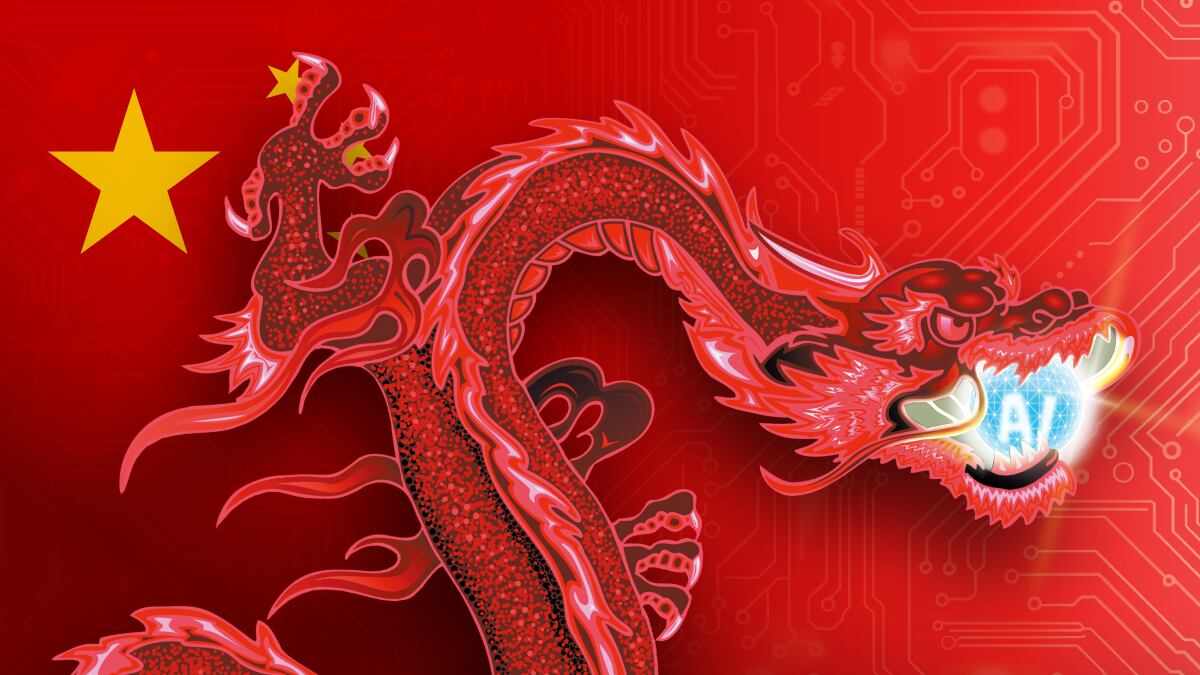
China’s Rapid Advancement in AI Technology
China is making significant strides in the field of artificial intelligence, not only in the development of AI chips but also in the creation of AI models that are now considered world-class. This progress has positioned China as a formidable player in the global AI landscape, particularly in the domain of open-source AI models.
Open-source AI models are those that publicly release their original code, allowing for transparency and collaboration. According to Artificial Analysis, a leading global firm specializing in AI performance evaluation, China has demonstrated strong competitiveness in this area. A recent evaluation highlighted the achievements of Chinese startups, with one notable example being MiniMax, which claimed the top spot in the comprehensive performance evaluation of global open-source AIs.
The Rise of MiniMax’s M2 Model
MiniMax, a Chinese startup, introduced its model ‘M2’ last month, which secured the top position in the global evaluation. This AI model utilized a low-cost and high-efficiency strategy, significantly enhancing computational efficiency and response speed. By activating only the parameters necessary for problem-solving during tasks, the model employed a method known as the ‘mixture of experts.’ This approach allowed it to perform exceptionally well in various scenarios.
In this evaluation, eight AI models developed by Chinese companies, including DeepSeek and Alibaba’s Qwen, ranked within the global top 10. Notably, Chinese models dominated the highest ranks, with only two models from OpenAI—ranked 2nd and 9th—making the list. These models were released under a ‘partially open approach (open weights).’
Divergent Strategies: Open vs. Closed AI Models
While U.S. tech giants like OpenAI, Anthropic, and Google have opted for a closed strategy, selling their self-developed AIs via subscriptions without public release, Chinese companies have taken a different approach. They openly share their AI models, allowing anyone to download and apply them. This strategy is seen as an effort to widely spread Chinese AI models and dominate the AI ecosystem.
The open-source approach allows for greater accessibility and fosters innovation, as developers from around the world can contribute to and improve upon these models. In contrast, the closed strategy limits access and may hinder the broader adoption of AI technologies.
Concerns Over China’s Dominance in Open-Source AI
Experts have expressed concerns over China’s growing dominance in the open-source AI market. At an international symposium in Yongsan, Seoul, Yann LeCun, a professor at New York University and one of the ‘four titans of AI,’ remarked, “Most open-source AIs today are Chinese-made.” He drew a parallel to the evolution of web browsers, where closed-source options like Netscape and Explorer eventually gave way to open-source alternatives like Chrome.
LeCun suggested that if U.S. tech companies continue with their closed AI models, they risk facing long-term challenges. The Washington Post reported that as Chinese companies spread open-source AI models, they are likely to significantly influence the future direction of global AI technological development. It is also expected that Chinese-centric values will permeate the AI ecosystem.
Conclusion
China’s advancements in AI technology, particularly in open-source models, are reshaping the global landscape. The strategies adopted by Chinese companies, such as sharing their models openly, are fostering innovation and widespread adoption. As the competition between open and closed AI models intensifies, the future of AI development will likely be influenced by these divergent approaches. The ongoing dialogue among experts highlights the importance of understanding the implications of these trends on the global AI ecosystem.