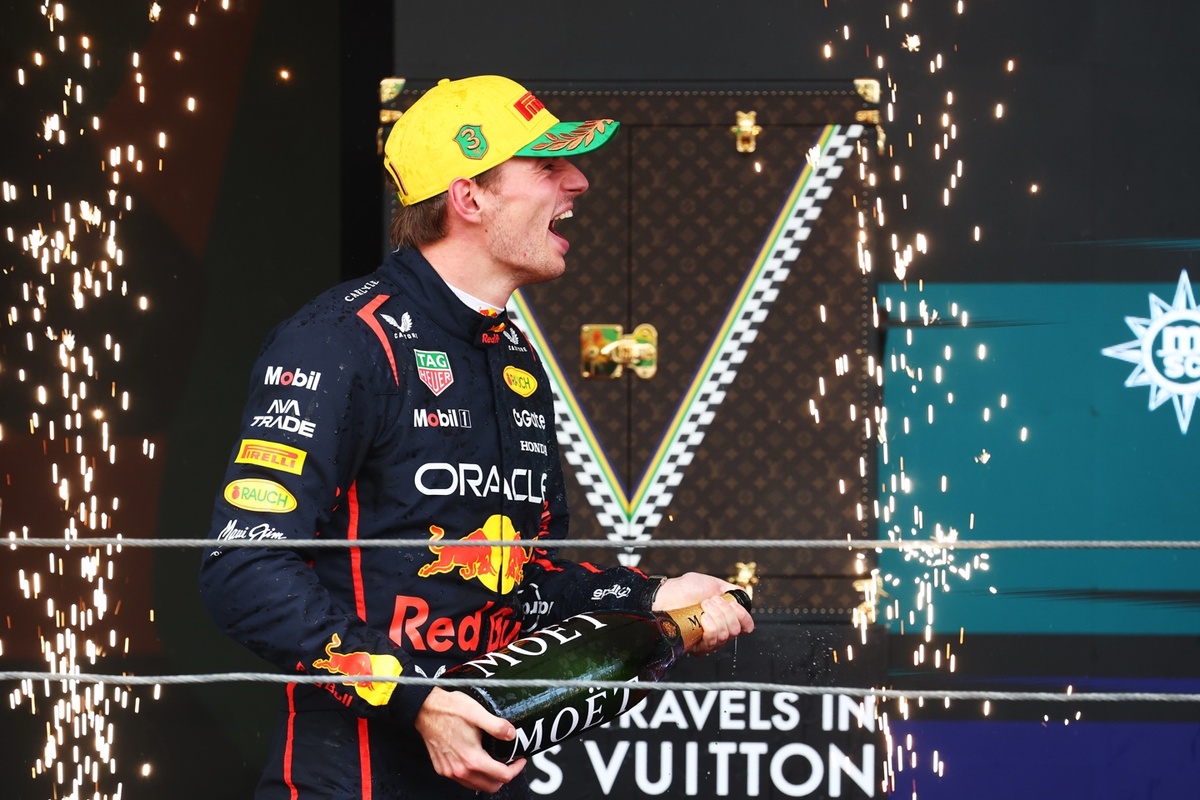
Max Verstappen’s Remarkable Comeback in Brazil
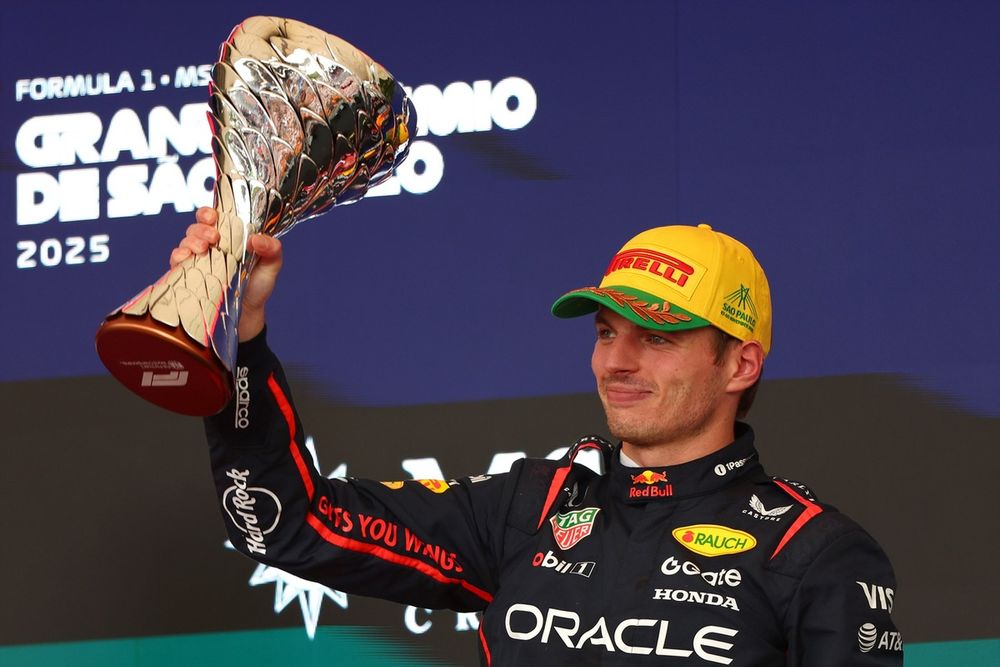
Max Verstappen’s journey from a pitlane start to securing a podium finish in the Brazil Grand Prix was nothing short of extraordinary. This achievement was all the more impressive given that Verstappen had been vocal about his car’s poor performance throughout the weekend, even managing to secure fourth place in the sprint race.
The team made adjustments to Verstappen’s car in response to his concerns, but these changes ended up making the car slower. As a result, both Verstappen and his teammate Yuki Tsunoda failed to advance from the first segment of qualifying. This marked Red Bull’s first double elimination since the 2006 Japanese Grand Prix.
Following this setback, Red Bull implemented further set-up changes to Verstappen’s car, along with fitting a new power unit. These modifications were carried out under parc ferme conditions, which meant Verstappen would start the race from the pitlane. Team principal Laurent Mekies emphasized that such bold decisions are part of the team’s competitive DNA, highlighting their refusal to settle for sub-optimal results.
“First, credit to Max for the sensational drive,” said Mekies. “He won last year here from P16 in the wet. I think we would probably agree that it was as sensational as last year to bring it to P3 from the pitlane in a dry, relatively uneventful race.”
Mekies explained that the team was not satisfied with the car’s balance and driver’s feeling after the sprint race. “We finished P4, but it was effectively a P5 without Oscar’s [Piastri] stoppage. Nobody wanted to settle for a car that would have been sub-optimal. We felt the optimum window was not where we were.”
A Risky Strategy Paying Off
Red Bull took a calculated risk by changing Verstappen’s car before the main qualifying session. “We tried our only car at that moment [Verstappen’s] to change it before the main qualifying. We obviously got it wrong, but it’s the way we go racing. We take risks and if we don’t take that amount of risks, we don’t think we’ll be able to win.”
Despite the initial misstep, the team managed to make the necessary adjustments. “The car was alive today, that’s the most important thing. The car was probably good enough to fight for the win today. That’s what we’re after, after the relatively average result of the sprint.”
Emotional Rollercoaster
Verstappen has experienced an emotional roller coaster over the past few months. He initially declared the championship over in the summer, then regained optimism when a new floor and set-up approach unlocked performance from Monza onwards. However, he later theatrically declared the race over again after being eliminated in Q1 in Sao Paulo.
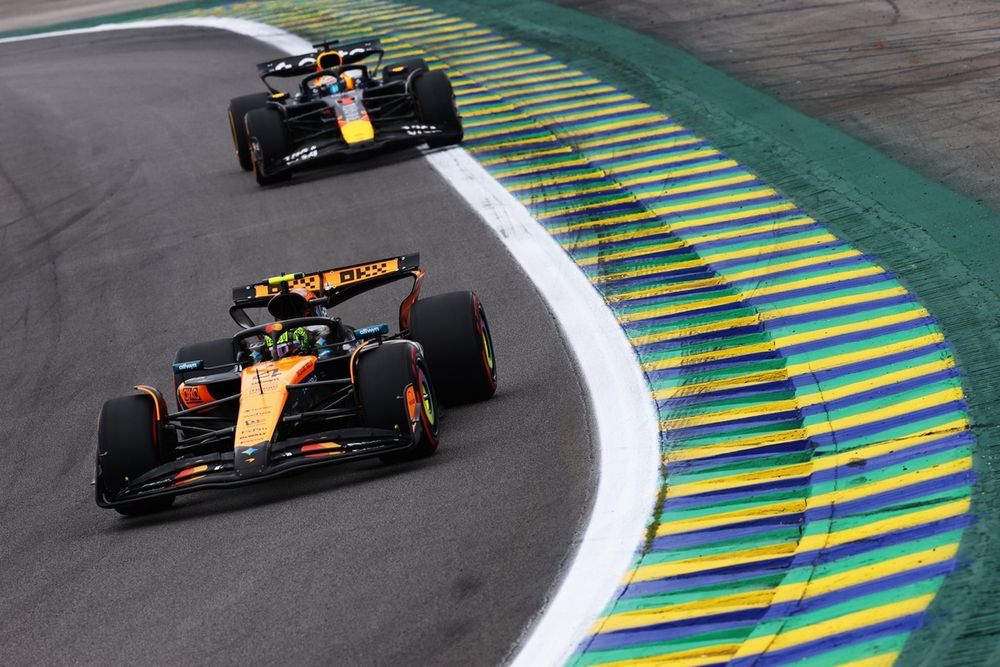
While Red Bull has found a way to run the RB21 with less critical rear ride height, the car still struggles with bottoming out at the rear on bumpier circuits. Sector two at Interlagos, known for its uneven surface and challenging corners, proved problematic for the Red Bull drivers during practice and sprint qualifying.
Adapting to Challenges
The changes made between the sprint race and qualifying for the grand prix on Verstappen’s car slightly improved performance through sector two, but at the cost of losing grip in other sectors. Mekies declined to elaborate on the specific adjustments made to Verstappen’s set-up between qualifying and the race.
“I’m not sure I would have a big interest to elaborate, but let me put it this way,” he said. “I don’t think it’s a secret that our window is narrow and it’s difficult to find that window for a given track layout and for a given set of circumstances and conditions on the track layout.”
Mekies added, “We have been fighting to find it this weekend and eventually we did. It does not mean that you start Las Vegas with a magic set-up in the car. It’s a question we have to fight every weekend – and we’ll try to have it a bit sooner next weekend.”