
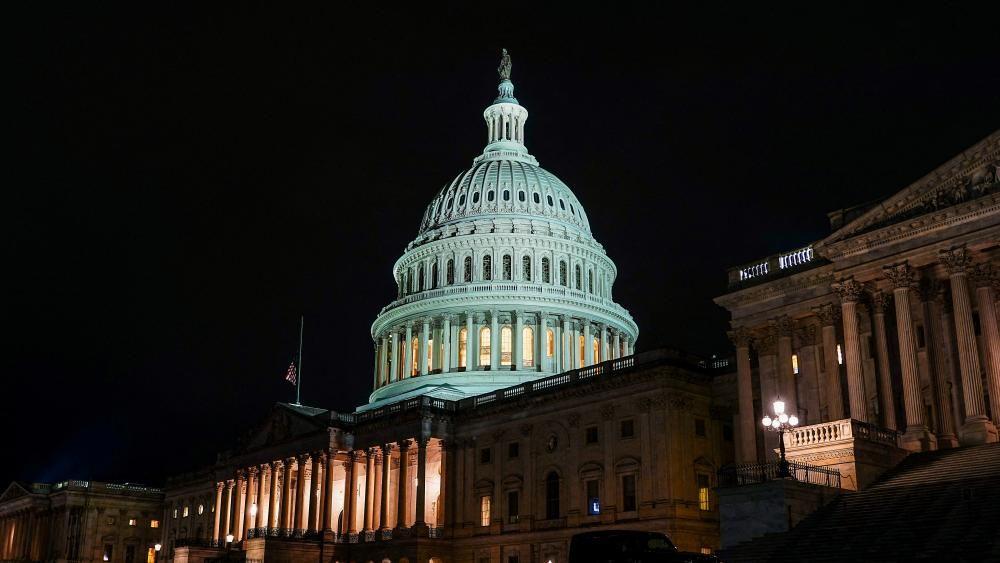
The US Senate Passes Funding Bill to End Government Shutdown
The US Senate has taken a significant step toward ending the longest government shutdown in history. A crucial funding bill was passed with a 60-40 vote late on Monday, marking a pivotal moment in the political landscape. This decision was supported by nearly all Republicans, who joined eight Democrats who broke from their party to approve the measure. The bill will fund the government until the end of January.
The next step involves the House of Representatives, which must also pass the bill before President Donald Trump can sign it into law. Trump has indicated his willingness to do so, signaling a potential resolution to the ongoing crisis. The deal was reached over the weekend, following negotiations between the eight Democrats and Republicans. This agreement aims to bring federal employees back to work and restart essential services.
Only one Senate Republican, Kentucky’s Rand Paul, voted against the measure alongside the majority of Democrats. Despite the largely empty room during the announcement, senators who remained until the end cheered and applauded the outcome.
Senator Susan Collins, a Republican who played a key role in authoring the bill, emphasized the importance of reopening the government and ensuring that federal employees receive compensation for their work during the shutdown. “We are going to reopen government, we are going to ensure that federal employees… will now receive compensation that they’re earned and deserve,” she said after the bill passed.
Impact of the Shutdown
The 41-day shutdown has had far-reaching consequences. It has disrupted air travel, left hundreds of thousands of federal workers furloughed, and created uncertainty for millions of Americans reliant on vital food aid. The bill now moves to the Republican-controlled House of Representatives, where members have been away from Washington since mid-September.
On Monday, with the Senate deal seemingly secured, House Speaker Mike Johnson called members back to Washington. The House will begin discussing the measure on Wednesday, although the timeline for its passage remains uncertain. With a two-seat majority, every vote is critical.
Details of the Funding Deal
The funding deal extends government operations until 30 January. It includes full-year funding for the Department of Agriculture, as well as funding for military construction and legislative agencies. Additionally, the bill guarantees that all federal workers will be paid for time lost during the shutdown and provides funding for the Supplemental Nutrition Assistance Program (SNAP) until next September.
The package also includes an agreement for a vote in December on extending healthcare subsidies set to expire this year. This was a key issue for Democrats, who had previously withheld support for new funding unless Congress addressed the subsidies that help tens of millions of Americans afford health insurance through government-run exchanges.
Political Reactions
Democratic leaders had expressed concerns about the bill, arguing that it fails to address the broader healthcare crisis. Senator Chuck Schumer, the minority leader, criticized the package for not making substantive changes to America’s healthcare system. However, some Democrats, like Virginia Senator Tim Kaine, supported the compromise, emphasizing that federal workers were grateful for the agreement.
Senate Majority Leader John Thune has pledged to take up the healthcare subsidies measure by the second week of December. In contrast, House Speaker Mike Johnson has stated he will not bring the measure to a vote in the House.
This development marks a critical turning point in the ongoing political debate, offering relief to many affected by the shutdown while highlighting the complex challenges ahead in addressing broader policy issues.