
Sudan’s Humanitarian Truce Proposal and Mixed Reactions
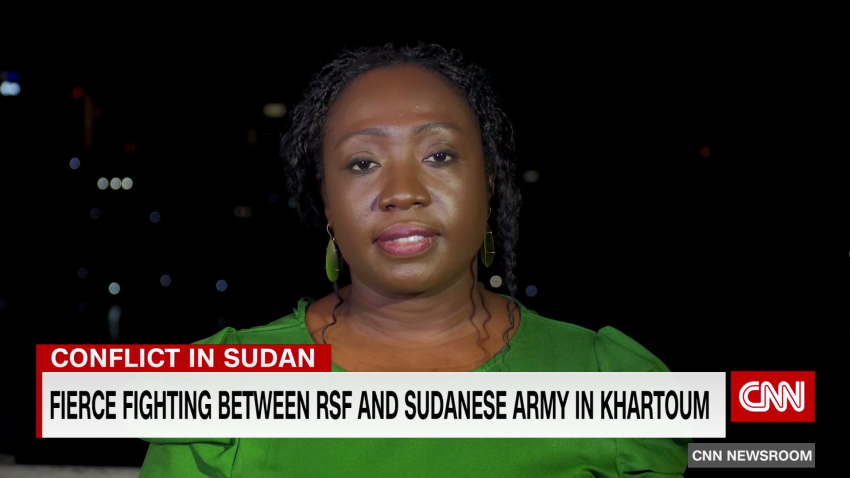
The Rapid Support Forces (RSF), a paramilitary group in Sudan, have accepted a three-month humanitarian truce proposed by the Quartet, which includes the United States, United Arab Emirates, Saudi Arabia, and Egypt. This decision has sparked both hope and skepticism as the country continues to face the devastating consequences of its ongoing war.
In a statement released yesterday, the RSF expressed its agreement with the proposal, stating that it aims to “ensure that the catastrophic humanitarian consequences of the war are addressed, and to enhance the protection of civilians.” The group also pledged to “urgently bring humanitarian aid to all Sudanese people.”
Furthermore, the RSF mentioned its desire to “immediately begin discussing the arrangements for the cessation of hostilities and the basic principles governing the political process in Sudan.” This indicates a potential shift in their approach, although many remain cautious about the sincerity of such commitments.
The Quartet’s September 12th declaration outlined a roadmap for a ceasefire, starting with a humanitarian pause, followed by a full ceasefire, and ultimately transitioning to a civilian-led government. However, not all parties have shown support for this plan.
Divergent Stances from Sudan’s Army Leadership
Sudan’s army leadership, represented by the Sudanese Armed Forces (SAF), has taken a different stance. After a meeting chaired by Lt Gen Abdelfattah El Burhan, the Head of the Sovereignty Council and Commander-in-Chief of the SAF, the Security and Defence Council merely “welcomed international initiatives,” without endorsing the proposal.
El Burhan later made a televised address, declaring that the RSF would be defeated and referring to the conflict as “the battle of the Sudanese people.” He vowed revenge for victims in El Fasher and across the country, while condemning foreign actors allegedly supporting the RSF.
Lt Gen Yasir El Atta, deputy commander-in-chief of the SAF, also dismissed the truce, effectively closing the door on the Quartet’s plan.
International Perspectives and Calls for Action
Despite the mixed reactions, US presidential adviser on Arab and African affairs, Massad Boulos, stated that both the SAF and RSF had “in principle” agreed to the truce. Washington is currently engaged in dialogue with both sides to finalize the details.
The US State Department emphasized its commitment to working with partners, including the Quartet, to resolve the crisis in Sudan. They continue to push for a humanitarian pause.
Meanwhile, the RSF’s announcement comes amid global condemnation for atrocities committed in North Darfur’s capital, El Fasher. Reports indicate that civilians there have been subjected to mass killings, sexual violence, ethnically-targeted attacks, and starvation.
In response to these reports, the RSF formed a committee to investigate what it called “individual abuses.” However, the international community has stepped up pressure on the warring parties.
Regional and Global Responses
Australia condemned “mass killings, sexual violence, and deliberate attacks on civilians,” pledging AU$10 million in humanitarian aid. The United Kingdom called for an emergency session of the UN Security Council, while in Washington, Senator Gregory Meeks urged Congress to cut off external support enabling RSF violence.
Qatar renewed its appeal for an “immediate ceasefire” and a negotiated political solution, and Eritrean President Isaias Afwerki warned that Sudan was being “targeted by regional and global powers.”
The UAE hailed the Quartet’s roadmap as “a historic step” and condemned “horrific crimes committed against civilians,” calling attacks on residential areas a “crime against humanity.” It urged unhindered humanitarian access, reiterating that “there is no military solution to the Sudanese crisis.”
Egyptian Foreign Minister Badr Abdelatty backed the plan as the “only solution,” stating that “there is no external solution, and the parties that imagine that they will decide the matter militarily and impose their will are wrong, this is something that will not happen.”
Political and Diplomatic Efforts
US Senator Chris Van Hollen, who has accused the UAE of arming the RSF, briefly halted his move to introduce the Sudan Defence Act after the RSF accepted the truce. While he welcomed the approval of the ceasefire, he stressed that the SAF has yet to agree.
Khaled Omar Youssef of the Sudanese Congress Party called the RSF statement a “laudable position” and urged the SAF to follow suit. He warned that Sudan risks losing a “real opportunity to stop the bloodshed and the mill of ruin.”
A delegation from the Sumoud coalition lobbied African and Western diplomats in Addis Ababa to back the Quartet roadmap.