
A New Jersey Sparks Cultural Tensions Between Algeria and Morocco
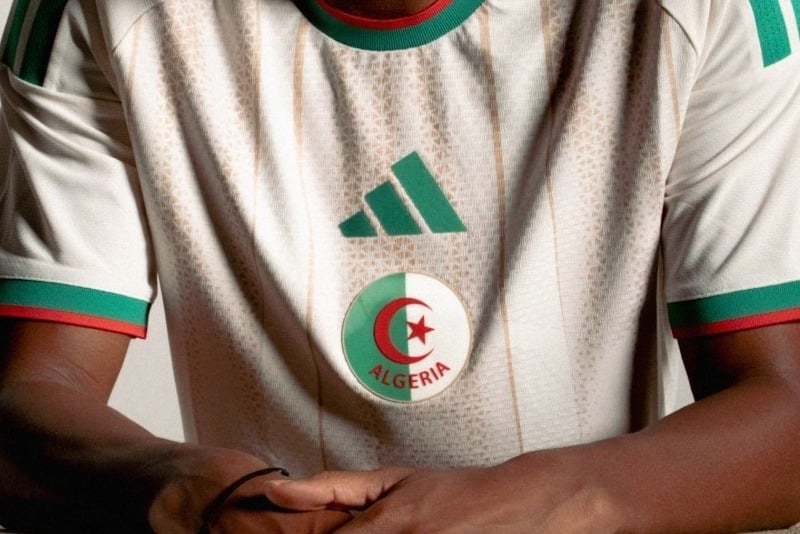
Algeria’s national football team has introduced a new Adidas jersey that has reignited a cultural dispute with Morocco. The design, which features geometric motifs resembling Moroccan zellige tilework, has sparked controversy just months before the Africa Cup of Nations (AFCON), which Morocco is set to host. This development has brought back memories of previous tensions between the two North African nations over cultural symbols.
The jersey, showcased in images published by sports outlets such as footpack.fr, includes vertical geometric bands that are woven into the fabric rather than printed on it. The shirt, which comes in off-white tones, reportedly omits the Algerian Football Federation crest in favor of a central national flag. According to Adidas, the design is inspired by Algeria’s “vibrant landscapes” and “national spirit.” However, the choice of zellige motifs has raised concerns among Moroccan officials and cultural experts.
Morocco’s Ministry of Culture has not yet issued an official statement regarding the new jersey. However, this issue echoes a similar controversy from 2022 when Adidas faced accusations of cultural appropriation for using Moroccan zellige motifs in Algerian kits. At the time, the German brand withdrew the design after discussions with Moroccan officials and released a statement expressing “deep respect” for Morocco’s artisans.
Zellige, a centuries-old mosaic craft originating in Fez, is recognized by the World Intellectual Property Organization and is considered a symbol of Moroccan identity. The Ministry of Culture has long emphasized academic documentation that confirms its roots in Moroccan architectural heritage since the 10th century. The use of zellige in the new jersey has therefore been seen as a sensitive issue, especially given the historical and cultural significance of the craft.
This is not the first time that Algeria and Morocco have clashed over cultural elements. In 2023, tensions resurfaced when Algeria presented a traditional costume in an international exhibition that Moroccan commentators claimed replicated the caftan fassi, a traditional Moroccan garment. Earlier disputes had also arisen over the registration of couscous and gnawa music as intangible heritage at UNESCO.
Historical Context of the Dispute
The rivalry between Algeria and Morocco extends beyond sports and into cultural and historical narratives. Both nations share a complex history, with overlapping influences from Berber, Arab, and French cultures. However, their identities have often been shaped by distinct political and social developments.
The use of zellige in the new jersey highlights the broader debate over cultural ownership and representation. While Algeria may view the design as a tribute to its diverse heritage, Morocco sees it as a misappropriation of its cultural symbols. This tension reflects deeper issues related to how nations define and protect their cultural legacies in an increasingly globalized world.
Implications for the 2025 AFCON
With the 2025 AFCON set to be hosted by Morocco, the timing of this controversy is particularly significant. The tournament is expected to draw attention from across the continent, and any cultural disputes could impact the event’s atmosphere. Morocco has invested heavily in preparing for the tournament, aiming to showcase its hospitality and cultural richness. The current situation, however, may complicate these efforts.
As the event approaches, both nations will need to navigate these tensions carefully. The resolution of this dispute could set a precedent for how cultural symbols are used in international contexts. It also raises important questions about the role of sports in representing national identity and the responsibilities of brands like Adidas in respecting cultural heritage.
Moving Forward
The situation underscores the importance of dialogue and mutual respect between nations. While cultural exchange can foster understanding, it must be approached with sensitivity and awareness. For Algeria and Morocco, finding a way to address these differences without escalating tensions will be crucial.
In the coming weeks, it will be interesting to see how both countries respond to this controversy. Will there be an official statement from Morocco? Will Adidas take further steps to address concerns? These questions remain unanswered, but one thing is clear: the debate over cultural symbols is far from over.