
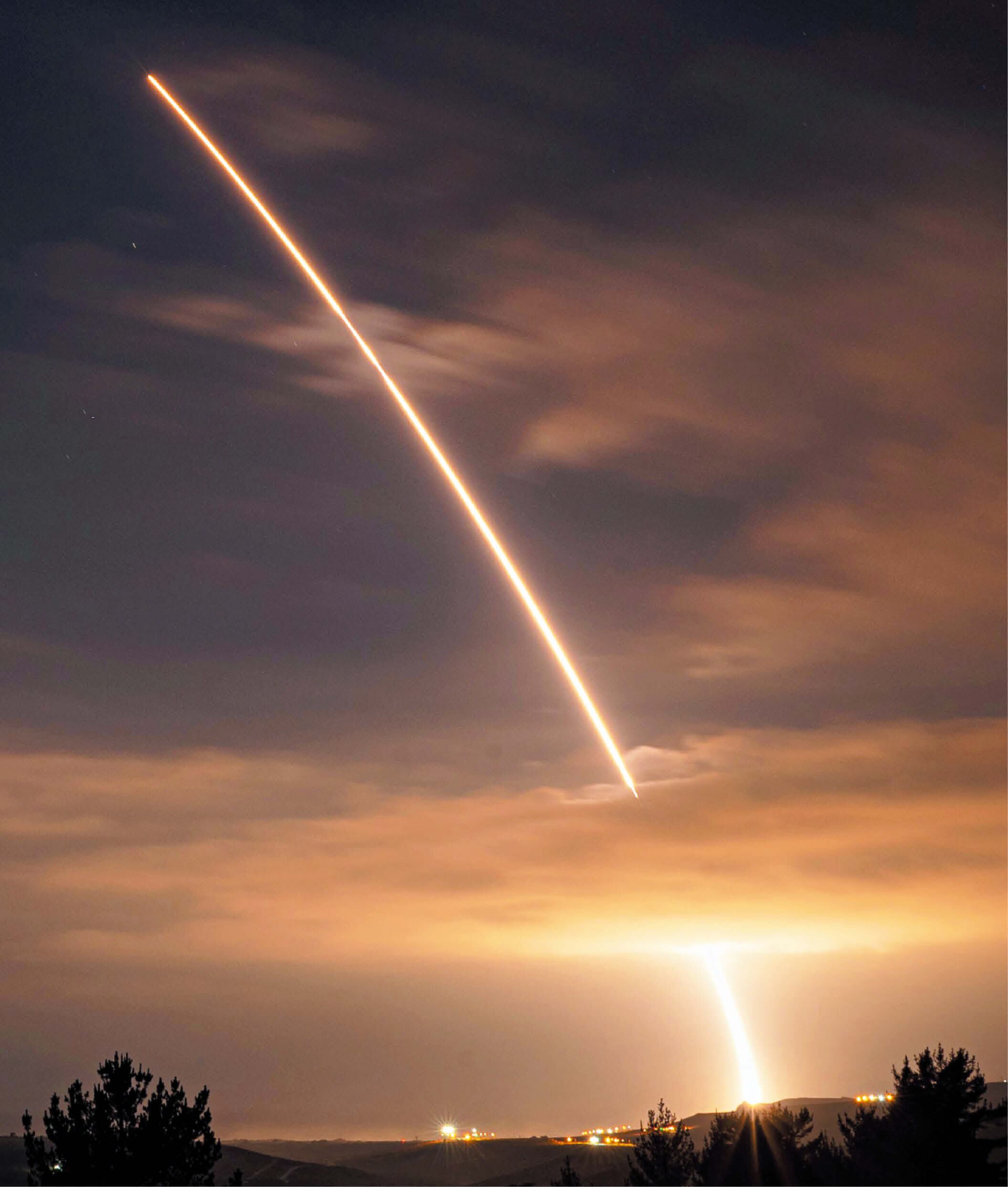
Launch of the Minuteman 3 ICBM
On a specific date, an intercontinental ballistic missile (ICBM) known as the ‘Minuteman 3’ was launched from Vandenberg Space Force Base in California, United States. This particular launch was notable because it did not involve a live warhead. The missile followed a parabolic trajectory during its flight, demonstrating the capabilities of the U.S. missile system without any actual nuclear payload.
The missile traveled approximately 6,800 kilometers before it successfully landed at a designated missile test site in the Marshall Islands. This test is part of a broader effort by the U.S. military to maintain and evaluate the performance of its strategic weapons systems. Such tests are crucial for ensuring the reliability and effectiveness of the country’s defense infrastructure.
Context of the Launch
The timing of this launch is significant, as it occurred during a period when U.S. President Donald Trump had expressed a clear intention to resume nuclear testing. His statements on social media, made prior to a meeting with Chinese President Xi Jinping in Busan, indicated his desire to restart nuclear weapon tests. This announcement came amid heightened geopolitical tensions and discussions about nuclear capabilities around the world.
In addition to his social media comments, Trump reiterated his stance on nuclear testing during a CBS interview. These statements reflected a shift in policy that could have implications for international relations and nuclear non-proliferation efforts. The potential resumption of nuclear testing raises concerns among various countries and international organizations, which have long advocated for the reduction of nuclear arsenals and the prevention of nuclear conflicts.
Implications of Nuclear Testing
The decision to conduct nuclear tests can have far-reaching consequences. It may lead to increased tensions between nations, particularly those with existing nuclear capabilities. Moreover, such actions could undermine global efforts to promote disarmament and reduce the risk of nuclear proliferation.
The U.S. has historically been a leader in nuclear research and development, and its policies on nuclear testing have often influenced other countries’ approaches to their own nuclear programs. The current administration’s stance on this issue could signal a new direction in U.S. foreign policy, potentially affecting alliances and diplomatic relationships.
International Reactions
The international community has closely monitored the U.S. approach to nuclear testing. Many countries and organizations have expressed concern over the potential for renewed nuclear arms races and the associated risks. Diplomatic channels have been utilized to address these concerns, with calls for transparency and dialogue to prevent misunderstandings and escalations.
Furthermore, the impact of nuclear testing extends beyond political and military considerations. Environmental and health risks are also significant factors that must be taken into account. The long-term effects of nuclear testing on ecosystems and human populations are well-documented, making it imperative for nations to consider these implications carefully.
Conclusion
The recent launch of the Minuteman 3 ICBM highlights the ongoing importance of maintaining and testing strategic missile systems. However, it also underscores the complex geopolitical landscape surrounding nuclear capabilities. As the U.S. continues to navigate its position on nuclear testing, the need for international cooperation and dialogue becomes increasingly critical. Ensuring that such activities are conducted responsibly and transparently will be essential for maintaining global stability and security.