
Introduction to the Soil Values Programme
The Soil Values Programme has taken a significant step forward by launching a new one-stop shop model in collaboration with the Nigerian Agro-Inputs Dealers Association (NAIDA) Northwest. This initiative aims to enhance the delivery of agricultural inputs to smallholder farmers within specific watersheds, ensuring that they have access to essential resources needed for sustainable farming.
The One-Stop Shop Model
During an event held in Dutse on Friday, the Country Coordinator of the Soil Values Programme, Mrs. Medina Fagbemi, highlighted the launch of nine mobile shops. These mobile shops are designed to cover over 20 communities in the northern regions. The program is expected to reach approximately 7,000 smallholder farmers across nine Local Government Areas (LGAs) in Kano, Jigawa, and Bauchi states. These farmers have undergone training on business and financial management related to the mobile shops.
Enhancing Access to Agricultural Inputs
According to Mrs. Fagbemi, the model brings essential agricultural inputs such as quality seeds, fertilizers, and crop protection products closer to farmers through a mobile, market-based delivery system. This approach helps farmers adopt more improved and impactful practices while reducing access barriers like distance, transport costs, and fragmented supply chains.
Integration of Advisory Services and Technology
The system also integrates agronomic advisory services, soil testing, and digital profiling of farmers. This ensures that input distribution is accompanied by knowledge and data-driven recommendations for improved soil health and productivity. By linking farmers, agro-dealers, and other value chain actors, the model promotes inclusive access, market efficiency, and sustainable soil management practices. These efforts contribute to resilient livelihoods and the overall objectives of the Soil Values Program.
Commitment and Expectations
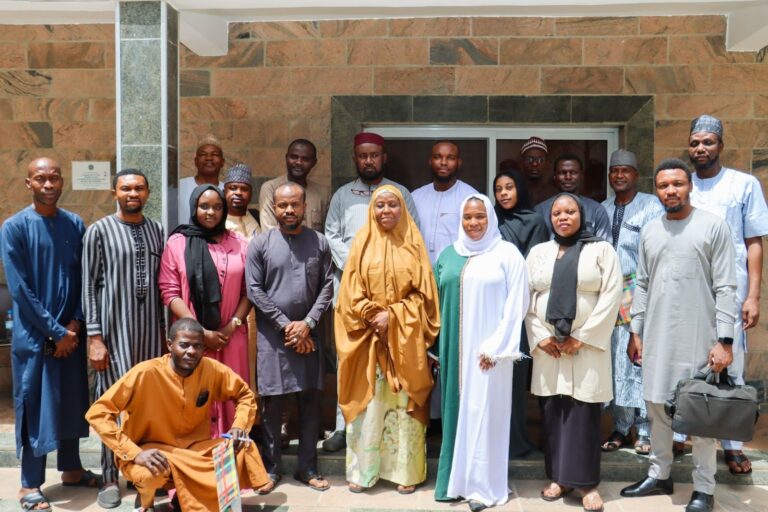
Mrs. Fagbemi commended the trained agropreneurs and extension agents for their commitment and enthusiasm in embracing this innovative model. She tasked them with upholding the principles of integrity, service, and inclusiveness as they deliver on the initiative’s vision to make agricultural inputs accessible, affordable, and impactful for every smallholder farmer.
Support from Key Stakeholders
Earlier, the Vice President of NAIDA Northwest, Abdullahi Muhammed, urged the beneficiaries to be good ambassadors of the project. He appealed to them to uphold and implement the recommendations from the three-day training they received from various resource persons.
In his remarks, the Director of the Jigawa State Agricultural Transformation Agency, Dr. Saifullahi Umar, commended the initiative. He expressed gratitude that Jigawa was among the benefiting states of the new model. Umar assured the support of the state government in achieving the set objectives and pledged the Namadi administration’s commitment to agricultural transformation.
Pledges from Beneficiaries
Speaking on behalf of the beneficiaries, Mathew Zaki and Tasiu Muhammed pledged proper utilization of the mobile shops. They committed to using the skills learned during the three days of training on best practices for using the models. Muhammed Auwal, the Secretary of NAIDA Northwest, tasked the beneficiaries with effective utilization. He reminded them that NAIDA will provide effective and close monitoring for the ethical utilization of the mobile shops in the respective designated centers.
Overview of the Soil Values Programme
The Soil Values Programme is a €100 million, 10-year initiative funded by the Directorate for International Cooperation of the Kingdom of the Netherlands. It is being implemented in Northern Nigeria, Niger, Mali, and Burkina Faso to improve soil fertility, decrease yield gaps, and increase resilience to climate shocks for 1.5 million smallholder farmers. Additionally, the program aims to restore 2 million hectares of degraded lands.
Impact in Northern Nigeria
In Northern Nigeria, the program aims to reach 600,000 smallholder farmers, including women and youths, over a 10-year period. The goal is to restore 800,000 hectares of degraded lands. The program is implemented by a consortium led by the International Fertilizer Development Centre, comprising SNV and Wageningen University & Research in the Netherlands. It receives support from knowledge partners, namely IITA, AGRA, ICRAF, IWMI, and ISRIC.