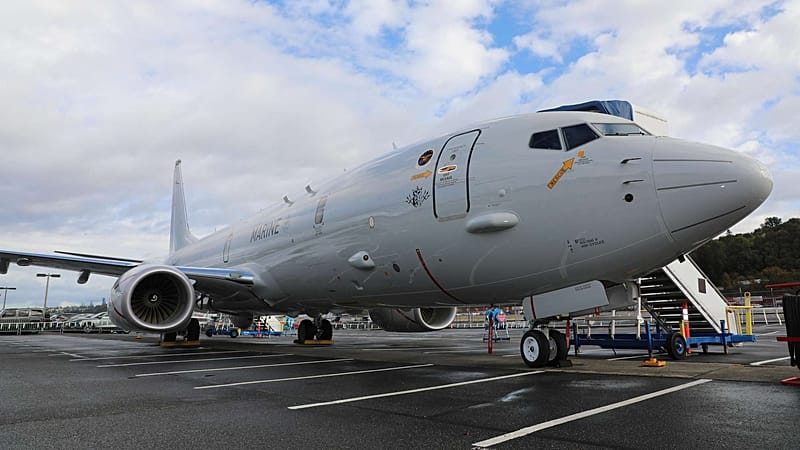
Germany Receives First P-8A Poseidon Maritime Patrol Aircraft
Germany has welcomed its first P-8A Poseidon maritime patrol aircraft at Berlin’s main airport, marking a significant step in enhancing the country’s naval capabilities. The aircraft, designed to detect and combat Russian submarines in the North Atlantic, was received by Defence Minister Boris Pistorius, who emphasized its importance in strengthening maritime surveillance and security.
The Boeing 737-based Poseidon arrived from the United States via Iceland, representing the first of eight aircraft that will be delivered by 2028 at a cost of €3.1 billion. This acquisition is part of Germany’s broader strategy to modernize its naval forces and address growing security concerns in the region.
Capabilities of the P-8A Poseidon
The P-8A Poseidon is a highly advanced aircraft capable of flying over 7,000 kilometers and carrying a range of weapons, including five MK-54 lightweight torpedoes weighing 300 kilograms each, as well as four AGM-84 Harpoon anti-ship missiles. These capabilities make it an essential asset for both maritime reconnaissance and potential combat operations.
Naval Inspector Jan Christian Kaack highlighted the significance of the aircraft, describing it as a “flying sentinel” that will sustainably strengthen Germany’s maritime capabilities. He emphasized the aircraft’s role in detecting and combating enemy submarines, which remains a critical concern for NATO allies.
Underwater Warfare and Surveillance
The Poseidon is equipped with sonar buoys that emit sound waves to locate submarines, with underwater microphones recording echoes to pinpoint both conventional and nuclear submarines. In addition to its anti-submarine warfare capabilities, the aircraft can also attack land targets, making it a versatile tool for various operational scenarios.
Germany plans to deploy the aircraft primarily in the strategic gap between Greenland, Iceland, and the United Kingdom, which serves as NATO’s main supply artery. This area is considered vulnerable to disruption by Russian submarines during times of conflict. Additionally, Russian submarines could potentially attack from the Baltic Sea via St Petersburg or from the Mediterranean via the Strait of Gibraltar.
Crew and Operational Structure
The tactical crew of the P-8A includes three pilots, two tactical coordinators, and six sensor operators, ensuring efficient operation and coordination during missions. This team is trained to handle complex tasks, including the deployment of sonar buoys and the interpretation of data collected from various sensors.
Strategic Importance and International Cooperation
Despite the vast expanse of Europe’s waters, there has been a lack of investment in protecting these areas, leaving critical undersea cables vulnerable. These cables connect northern and central Europe and are essential for global communication and energy infrastructure. Russian submarines have repeatedly attempted to spy on these systems, scout nodes, and cause damage, while Moscow’s shadow fleet has been accused of underwater cable sabotage in Europe’s north.
To address these challenges, the UK and Germany signed the Trinity House Agreement in 2024, committing to joint patrols of the North Sea and North Atlantic. German Poseidons will operate from Lossiemouth military base in Scotland, where Defence Minister Pistorius emphasized the importance of knowing where Russian submarines are and what they are doing.
NATO partners, including the United States and Norway, also operate the P-8A Poseidon, highlighting its widespread use and effectiveness in maritime surveillance.
Replacement of Older Aircraft
The P-8A Poseidon replaces Germany’s P-3C Orion aircraft, which are propeller-driven planes purchased second-hand from the Netherlands in 2004 and are now around 40 years old. Portugal has also acquired six of these retiring aircraft to expand its existing P-3C Orion fleet.
The new P-8A will be stationed at Nordholz airbase in the Cuxhaven district, a NATO reconnaissance base, where it arrived later on Friday. This move underscores Germany’s commitment to enhancing its maritime defense capabilities and contributing to regional and global security efforts.