
Government Accused of Misusing Statistics to Expand Regulated Areas
Recent revelations have sparked controversy over the government’s decision to expand regulated areas in its October 15 measures. The allegations suggest that the government may have intentionally used outdated data instead of the latest statistics, leading to the designation of several regions as speculative overheating zones.
On the 7th, it was confirmed that the government had received the latest statistics before announcing the policy. If these updated figures had been considered, it would have been impossible to include all of Seoul and 12 cities and districts in Gyeonggi Province as regulated areas. This has led to accusations that the government “intentionally distorted statistics” to justify the expansion of these zones.
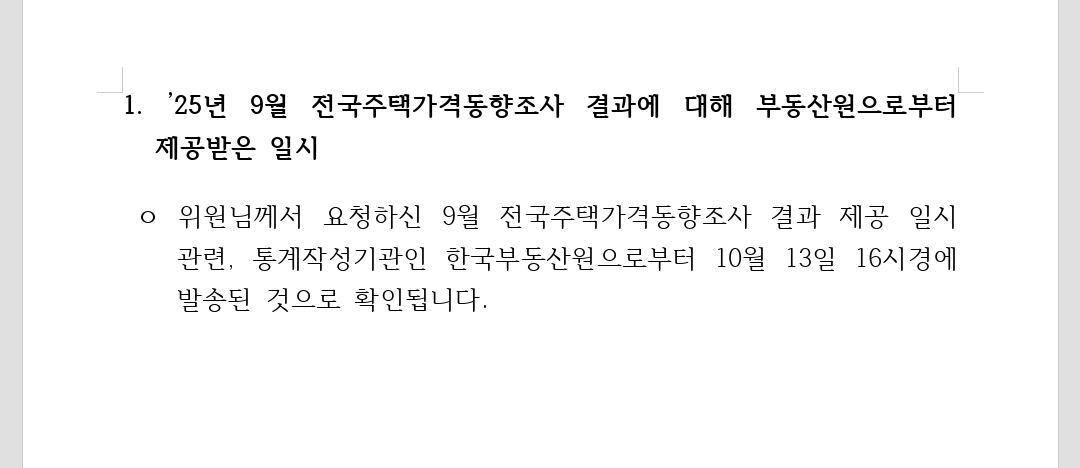
According to Rep. Kim Eun-hye of the People Power Party, the Ministry of Land, Infrastructure and Transport received the results of the “September National Housing Price Trend Survey” from the Korea Real Estate Board at 4 p.m. on the 13th. To classify an area as a speculative overheating zone, the apartment price increase rate over the “immediate preceding three months” must exceed 1.5 times the consumer price inflation rate. However, if the September statistics had been applied, 10 areas—including Jungnang, Gangbuk, Dobong, Eunpyeong, and Geumcheon in Seoul, and Uiwang, Suwon Jangan, and Suwon Paldal in Gyeonggi—would not have met this requirement.
Despite the fact that the three months immediately preceding the announcement of the October 15 measures were July to September, the government applied statistics from June to August, citing the reason that the September statistics had not yet been released. As a result, these areas were all included in the regulated zones, subjecting them to stringent regulations such as significantly reduced loan limits and a ban on the transfer of reconstruction and redevelopment association member status.
As controversy erupted over allegations that the government “intentionally excluded the latest statistics to expand regulated areas,” the Ministry of Land, Infrastructure and Transport issued an explanatory statement on the morning of the same day. The ministry stated, “Since the September price statistics had not been published by the 13th–14th, when the Housing Policy Deliberation Committee reviewed and approved the designation of regulated areas, the June–August statistics were used as the basis for designation.” However, as it became known that the latest statistics had been provided in advance, suspicions arose that the government had selectively used the data.
The ministry explained, “If the Korea Real Estate Board disclosed the statistics to external committee members before the official release on the 15th, this could constitute a potential legal violation under the Statistics Act,” adding, “The regulated areas were designated based on the most recent three-month statistics in accordance with the schedule agreed upon through consultations between relevant ministries.”
Resident backlash in the affected areas has intensified, with lawsuits anticipated. The Reform Party is recruiting plaintiffs for administrative lawsuits to cancel the designation of regulated areas. These lawsuits target residents of eight areas that would have been excluded if the September statistics had been applied, as well as real estate owners within the regulated zones. Rep. Chun Ha-ram’s office of the Reform Party is currently recruiting plaintiffs for administrative litigation involving residents of these eight areas and real estate owners in the regulated zones.