
Market Volatility and the Impact of AI Stock Declines
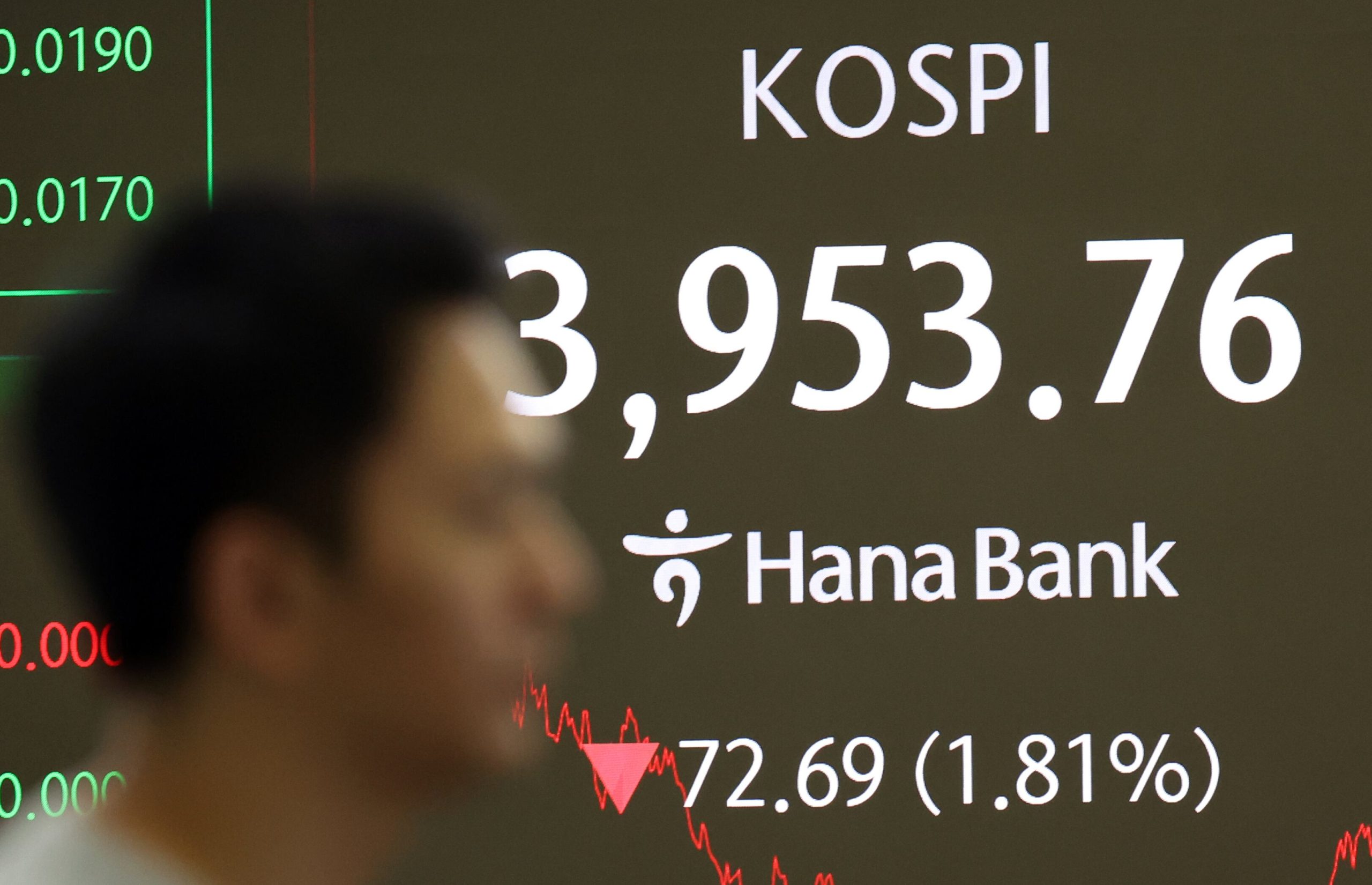
The U.S.-originated ‘AI bubble theory’ has resurfaced, leading to a significant decline in tech stocks on the New York Stock Exchange. This development had a ripple effect on global markets, including the KOSPI, which fell below the 3,900 mark during intraday trading on the 7th. Although the index managed to narrow its losses later in the day, it ultimately closed below the 4,000 threshold.
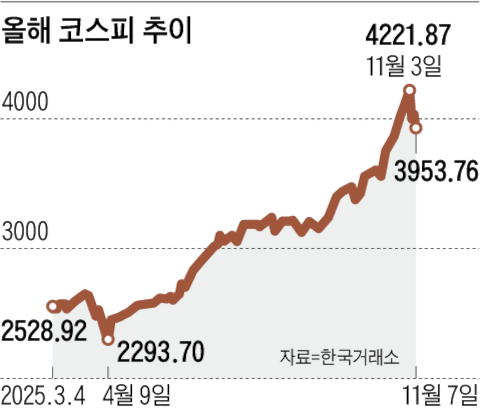
On the 7th, the KOSPI closed at 3,953.76, marking a 1.8% drop from the previous day. This was the first time the index closed below 4,000 in nine trading days since October 24 (3,941.59). During intraday trading, the index dropped as low as 3,887.32. All of the top 10 market cap stocks, including Samsung Electronics (-1.3%) and SK Hynix (-2.2%), experienced declines.
The immediate cause of the KOSPI’s drop was the weakness in major AI-related tech stocks on the New York Stock Exchange on the 6th. Companies such as NVIDIA (-3.7%), Palantir (-6.8%), and AMD (-7.3%) saw sharp declines, while the S&P 500 and Nasdaq Composite indices fell by 1.1% and 1.9%, respectively.
The Role of Government Support and Investor Sentiment
The previous day, the Chief Financial Officer (CFO) of OpenAI, the developer of ChatGPT, made comments regarding the costs of purchasing AI chips, stating, “We are looking for ways the government can play a role.” However, David Sacks, chairman of the White House Science and Technology Advisory Committee, dismissed this notion on the social media platform X, saying, “There will be no federal government bailout for AI.” This statement quickly cooled investor sentiment toward tech stocks.
The interpretation that major AI companies are seeking government support due to an inability to generate profits from AI, yet no aid is forthcoming, reignited the ‘AI bubble theory.’ This theory suggests that the current enthusiasm for AI stocks may be overinflated, leading to potential market corrections.
In addition to these developments, news about the largest U.S. job cuts in 22 years as of October, along with hawkish remarks from a senior Federal Reserve official favoring monetary tightening, further dampened investor sentiment. Ostan Gulsvy, President of the Federal Reserve Bank of Chicago, stated, “Rushing into interest rate cuts is risky.”
Foreign and Domestic Investment Trends
On the stock market that day, foreigners extended their net selling streak for the fifth consecutive trading day, selling a net 462.5 billion Korean won worth of stocks. In contrast, individuals continued their net buying streak for the fifth straight session, purchasing a net 679.1 billion Korean won worth of stocks.
Since the start of this month, foreigners have sold 6.0467 trillion Korean won worth of stocks, while individuals have responded with net purchases of 7.4433 trillion Korean won. Kang Jin-hyeok, a researcher at Shinhan Securities, noted, “A structure where individuals are absorbing the volume sold by foreigners is continuing,” adding, “Foreigners’ profit-taking selling may persist until additional positive factors emerge.”
As foreigners sold large amounts of domestic stocks, expectations of increased demand to convert the sold won into dollars drove the won exchange rate sharply higher. That day, the won-to-dollar rate closed at 1,456.9 won, up 9.2 won, during midweek trading (3:30 p.m.). This was the highest level since April.
Moon Da-un, a researcher at Korea Investment & Securities, stated, “Weakening expectations for U.S. rate cuts have sustained a strong dollar, and overlapping foreign stock selling has pushed the won exchange rate upward,” adding, “A temporary surge to the 1,480 won level is also possible.”