
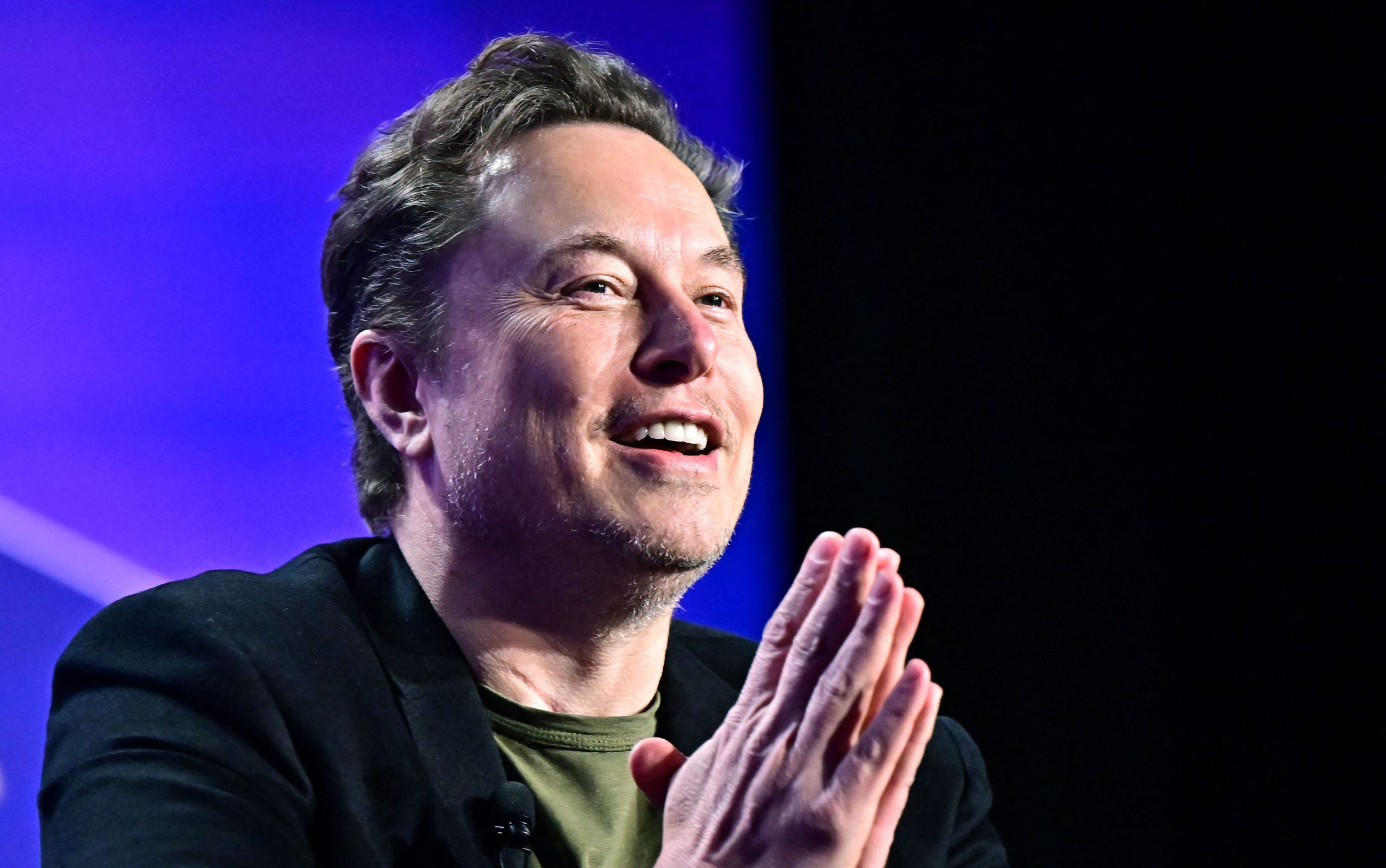
Elon Musk’s $1 Trillion Compensation Plan Approved by Shareholders
Elon Musk, the chief executive officer of Tesla, has received shareholder approval for a groundbreaking compensation plan that could potentially grant him incentives worth up to $1 trillion. This staggering amount is more than double the size of the South Korean government’s proposed budget for the next year, which totals 728 trillion Korean won. The package represents an unprecedented milestone in global corporate history.
The compensation plan outlines 12 distinct stages of market capitalization and performance targets. For each stage that Musk successfully achieves, he will be entitled to receive 1% of Tesla’s total common stock. The initial stage requires increasing Tesla’s current market capitalization from $1.5 trillion to $2 trillion and delivering 20 million vehicles. The second stage involves reaching a $2.5 trillion market cap and securing 10 million full self-driving (FSD) software subscriptions. By 2035, Musk must achieve all 12 stages, which include raising the market cap to $8.5 trillion, deploying 1 million humanoid robots, operating 1 million robotaxis commercially, and generating $400 billion in pre-tax earnings (EBITDA).
Despite opposition from some institutions, including Norway’s sovereign wealth fund, individual investors largely supported the plan, resulting in over 75% shareholder backing. Following the vote, Tesla’s stock price saw a positive reaction, rebounding over 2% in after-hours trading.
If fully realized, Musk’s current 13% stake in Tesla would increase to over 25%. During the shareholder meeting, Musk also announced that Tesla’s next-generation AI chips will be produced at Samsung Electronics’ Korean factories and TSMC’s facilities in Taiwan, Texas, and Arizona. “One of my concerns is how to secure enough chips,” Musk stated, adding that the company is considering building its own chip production facilities.
Key Stages of the Compensation Plan
- Stage 1: Increase Tesla’s market capitalization to $2 trillion and deliver 20 million vehicles.
- Stage 2: Achieve a $2.5 trillion market cap and secure 10 million FSD software subscriptions.
- Stage 3: Reach a $3 trillion market cap and generate $100 billion in annual revenue.
- Stage 4: Expand the market cap to $3.5 trillion and achieve 10 million vehicle deliveries.
- Stage 5: Attain a $4 trillion market cap and reach 15 million vehicle deliveries.
- Stage 6: Increase the market cap to $4.5 trillion and generate $150 billion in annual revenue.
- Stage 7: Reach a $5 trillion market cap and achieve 20 million vehicle deliveries.
- Stage 8: Expand the market cap to $5.5 trillion and generate $200 billion in annual revenue.
- Stage 9: Attain a $6 trillion market cap and achieve 25 million vehicle deliveries.
- Stage 10: Reach a $6.5 trillion market cap and generate $250 billion in annual revenue.
- Stage 11: Expand the market cap to $7 trillion and achieve 30 million vehicle deliveries.
- Stage 12: Reach a $8.5 trillion market cap, deploy 1 million humanoid robots, operate 1 million robotaxis, and generate $400 billion in EBITDA.
Shareholder Support and Market Reaction
While some institutional investors expressed concerns about the scale of the compensation plan, individual shareholders overwhelmingly supported it. The approval with over 75% of the votes demonstrated strong confidence in Musk’s leadership and vision for Tesla. This support was reflected in the stock market, where Tesla’s shares rose significantly following the announcement.
Musk’s expanded ownership stake in Tesla could have significant implications for the company’s future direction. With a larger shareholding, he may have even more influence over strategic decisions, including the development of new technologies and expansion into emerging markets.
Strategic Collaborations and Future Plans
In addition to the compensation plan, Musk highlighted strategic collaborations with major semiconductor manufacturers. The decision to produce Tesla’s next-generation AI chips at Samsung Electronics’ Korean factories and TSMC’s facilities in Taiwan, Texas, and Arizona underscores the importance of securing reliable and advanced chip production capabilities.
Musk acknowledged the challenges of obtaining sufficient chips and mentioned that the company is exploring the possibility of building its own chip production facilities. This move could further solidify Tesla’s position as a leader in the automotive and technology industries.
As Tesla continues to push the boundaries of innovation, the approval of this compensation plan marks a significant milestone in the company’s journey. With Musk’s vision and the support of shareholders, the future looks promising for the electric vehicle giant.