
Offshore Bid Round 2025 Marks Major Step in Pakistan’s Energy Strategy
The Ministry of Energy recently announced the results of the Offshore Bid Round 2025, which took place after an 18-year gap. This event represents a significant milestone in the country’s efforts to achieve energy security and develop its local resources. The bid round was launched in January 2025 and offered 40 offshore blocks for petroleum exploration. A total of 23 blocks were submitted for bidding, covering approximately 53,510 square kilometers. This level of interest highlights the growing confidence among investors in Pakistan’s upstream sector.
Before the bidding process began, the Ministry introduced a Model Production Sharing Agreement (MPSA), which is a crucial document included in the bid package. This agreement aims to ensure transparency, competitiveness, and investor confidence. In addition, the Offshore Petroleum Rules were promulgated to establish a comprehensive regulatory framework that supports renewed offshore exploration activities in Pakistan’s waters.
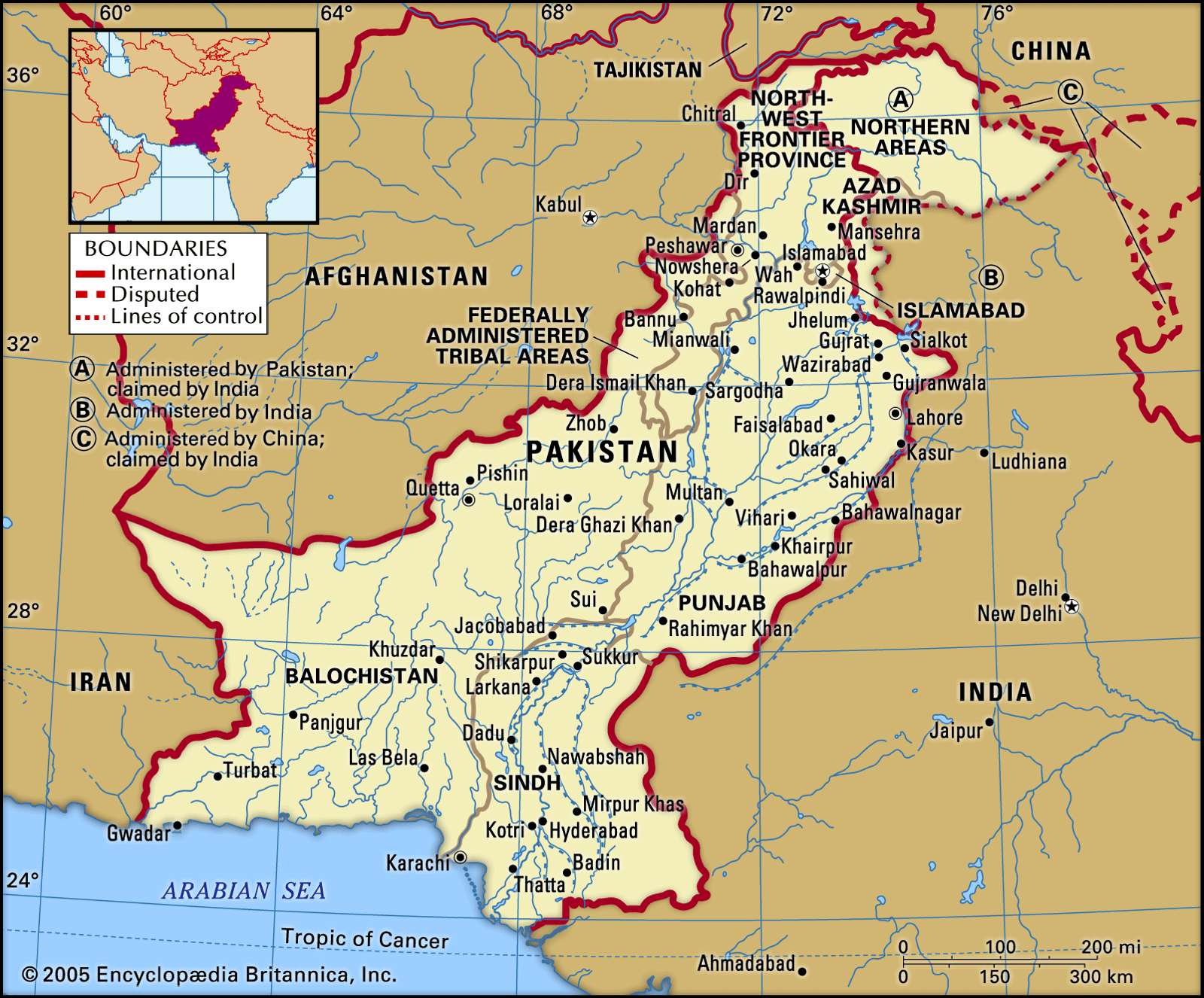
A recent basin study conducted by the U.S. firm DeGolyer and MacNaughton (DandM) has identified significant hydrocarbon potential in Pakistan’s offshore basins. Building on this promising assessment, the Offshore Bid Round 2025 was initiated with the goal of offering blocks that enable companies to conduct systematic exploration efforts across both the Indus and Makran basins.
On October 31, 2025, the bids were publicly opened by the Bid Opening Committee, chaired by the Director General Petroleum Concessions (DGPC). Representatives from the provincial governments of Sindh and Balochistan, the two coastal provinces hosting the offshore areas, were present during the event.
The response to the bid round has been overwhelmingly positive, reflecting strong investor confidence in Pakistan’s upstream sector. Among the successful bidders are prominent national companies such as OGDCL, PPL, MariEnergies, and Prime Energy. Additionally, several international and private-sector partners, including Turkish Petroleum, United Energy, Orient Petroleum, and Fatima Petroleum, have joined as joint venture partners. This underscores the increasing international interest in Pakistan’s offshore potential.
During Phase-I of the initial three-year license period, a total of 4,427 work units have been committed, representing an investment of approximately 80 million USD. The companies have submitted work programs designed to progressively mitigate geological risks. In the event of exploration drilling, investments could reach up to USD 750 million to USD 1 billion. During Phase-I, the companies will conduct comprehensive geophysical and geological (GandG) studies, including seismic data acquisition, processing, and interpretation, to better define the hydrocarbon potential of Pakistan’s offshore basins. Upon completion of these studies, the Phase-II work program will be finalized, which will include the drilling of exploratory wells in prospective areas.
Pakistan’s strategy to initiate exploration in both the Indus and Makran basins simultaneously has proven to be successful, as evidenced by the participation and outcomes of the bid round. After the completion of GandG work and drilling planning, the Ministry will invite global oil majors to join the next phase of offshore exploration. Several of these major companies are already in contact with the Government and local companies and are currently evaluating the available data.
It is also noteworthy that TPAO, the national company of Turkey, has taken over a 25% stake in offshore block-C along with operatorship. This development marks a significant intervention in the ongoing offshore exploration efforts.