
Pro-Palestinian Activists Arrested During Concert in Paris
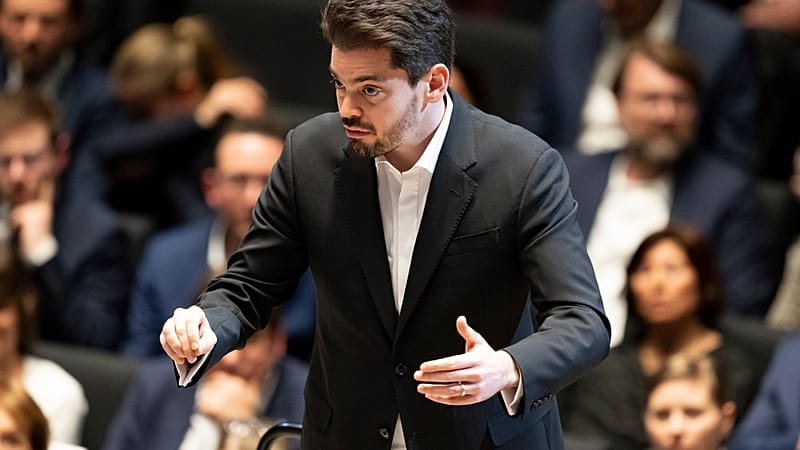
Four pro-Palestinian activists have been arrested for allegedly setting off smoke bombs during a concert in Paris by the Israel Philharmonic Orchestra. The incident took place at the Philharmonie de Paris, where Israeli conductor Lahav Shani led the performance on Thursday night.
Videos circulating online show an individual brandishing a smoke bomb from the audience, while other spectators attempted to intervene, highlighting the confusion that occurred in the Pierre-Boulez room. The event was disrupted multiple times, with reports of clashes between attendees and the demonstrators. According to a statement from the Philharmonie de Paris, three interruptions were recorded, and the organization expressed regret over the incidents, which led to the evacuation of the individuals involved.
The Philharmonie de Paris strongly condemned the actions, stating that “nothing can justify such behavior.” This incident has sparked renewed debate about the intersection of politics and culture, particularly in light of recent criticisms from the trade union CGT Spectacle.
Union Calls for Contextualization of the Concert
On 29 October, the branch of the CGT Spectacle that represents employees in the cultural sector called for the concert in Paris by the Israel Philharmonic Orchestra to be contextualized. The union argued that the Philharmonie de Paris had a responsibility to inform its audience about the “extremely serious accusations” made against the leaders of Israel.
This call for awareness came amid growing tensions surrounding the role of cultural institutions in addressing political issues. In response, the Minister of Culture, Rachida Dati, publicly supported the Israel Philharmonic Orchestra, emphasizing the importance of freedom of creation and programming. She stated, “Nothing justifies a call for a boycott of this moment of culture (…) Freedom of creation and programming is a value of our Republic. There is no excuse for anti-Semitism.”
Previous Cancellations and Political Tensions
The incident in Paris follows a similar situation that occurred last September when the Ghent Festival in western Belgium canceled a concert that Lahav Shani was scheduled to conduct with the Munich Philharmonic Orchestra. According to Shani, the festival management demanded that he make a “political statement despite [his] long-standing and publicly expressed commitment to peace and reconciliation.”
This demand raised concerns about the pressure placed on artists to take sides in politically charged situations. German Chancellor Friedrich Merz criticized the spread of anti-Semitism, calling it “the poison of anti-Semitism,” which further highlights the sensitivity of the issue.
Ongoing Debate Over Art and Politics
The events in Paris have reignited discussions about the role of art in political discourse. While some argue that cultural events should remain neutral, others believe that they provide a platform for important conversations about global issues. The Philharmonie de Paris’ response to the incident reflects the challenges faced by cultural institutions in balancing artistic expression with political sensitivity.
As the debate continues, the arrest of the four activists serves as a reminder of the complex relationship between art, politics, and public protest. The incident also underscores the need for dialogue and understanding in an increasingly polarized world.
Conclusion
The disruption at the Philharmonie de Paris highlights the growing tension between cultural expression and political activism. As artists and institutions navigate these challenges, the question remains: how can the arts serve as a bridge between different perspectives, rather than a battleground for ideological conflicts? The ongoing discussions around this incident suggest that the answer lies in fostering open dialogue and respecting diverse viewpoints.