
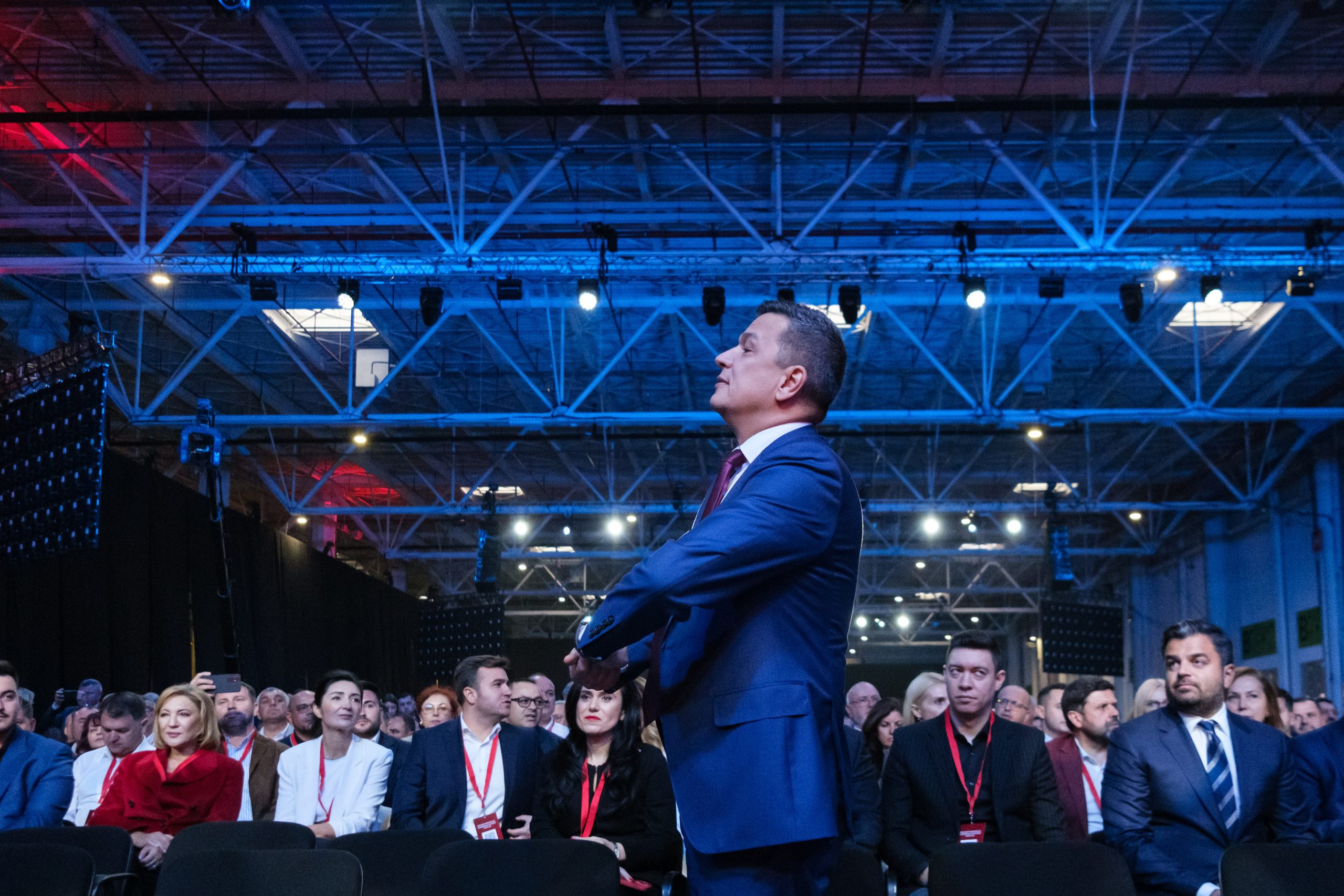
PSD Congress in Bucharest: Leadership Changes and Statute Revisions
Representatives of the ruling Social Democratic Party (PSD) convened for a congress in Bucharest on Friday, November 7, to elect new leadership and revise the party’s Statute. The event marked a significant moment for the party as it seeks to redefine its direction and structure.
Sorin Grindeanu emerged as the sole candidate for party leader, following Marcel Ciolacu’s resignation in May. In his speech at the congress, Grindeanu emphasized the need for a stronger and more proactive party. He stated that he no longer wants “a reactive, fragile PSD that only responds to attacks.” Instead, he envisions a party that sets the tone, offers solutions, and provides real hope. Grindeanu also highlighted the importance of not forgetting the party’s identity, stating that it should not be ashamed in front of the Right’s criticism.
Grindeanu, a close ally of former prime minister Marcel Ciolacu, has been a member of the party since 1996. During the congress, he reflected on the party’s achievements, naming several former leaders who were present. He mentioned Adrian Năstase, who led Romania into NATO; Mircea Geoană, who guided the country into the European Union; Victor Ponta, who transformed Romania’s economic and social course; and Marcel Ciolacu, who helped Romania enter Schengen.
Statute Amendments and Leadership Structure
The congress also focused on amending the party’s Statute. Members unanimously adopted changes that increase the number of leadership positions. Specifically, the party will now have five first vice presidents instead of one, and 20 vice presidents. This restructuring aims to enhance the party’s internal organization and broaden its representation.
Another key change involves the removal of the term “progressive party” from the Statute. The revised document emphasizes the promotion of “national, religious, traditional values,” signaling a shift towards a more conservative stance. This move aligns the party with broader conservative trends in Romanian politics, differentiating it from other Social Democratic parties in Europe.
Leadership Reshuffles and New Appointments
The congress served as an opportunity to reshuffle factions within the party’s leadership structure. Paul Stănescu, once an influential leader, will no longer be part of the future leadership after serving as secretary general for six years. He is replaced by MEP Claudiu Manda, husband of Craiova mayor Olguța Vasilescu.
New appointments include Corneliu Ștefan, president of Dâmbovița County Council; Bogdan Ivan, energy minister; Gheorghe Șoldan, president of Suceava County Council; Victor Negrescu, MEP and vice president of the European Parliament; and Ionuț Pucheanu, mayor of Galati.
Daniel Băluță, the PSD candidate for the Bucharest City Hall, took over as head of the party’s Bucharest branch from Gabriela Firea, who is now regional vice president for Bucharest-Ilfov.
Former Leaders’ Comments
Former leaders also shared their perspectives with the press. Marcel Ciolacu expressed his vision for a new government coalition without the reformist center-right party, Save Romania Union (USR). Adrian Năstase, who was jailed in 2014 for corruption, commented that President Nicușor Dan disappointed his voters, according to Digi24.
The congress concluded with a renewed sense of purpose for the PSD, as it moves forward with a restructured leadership and a revised ideological direction. The party’s next steps will be closely watched as it navigates the challenges of maintaining relevance and influence in Romanian politics.