
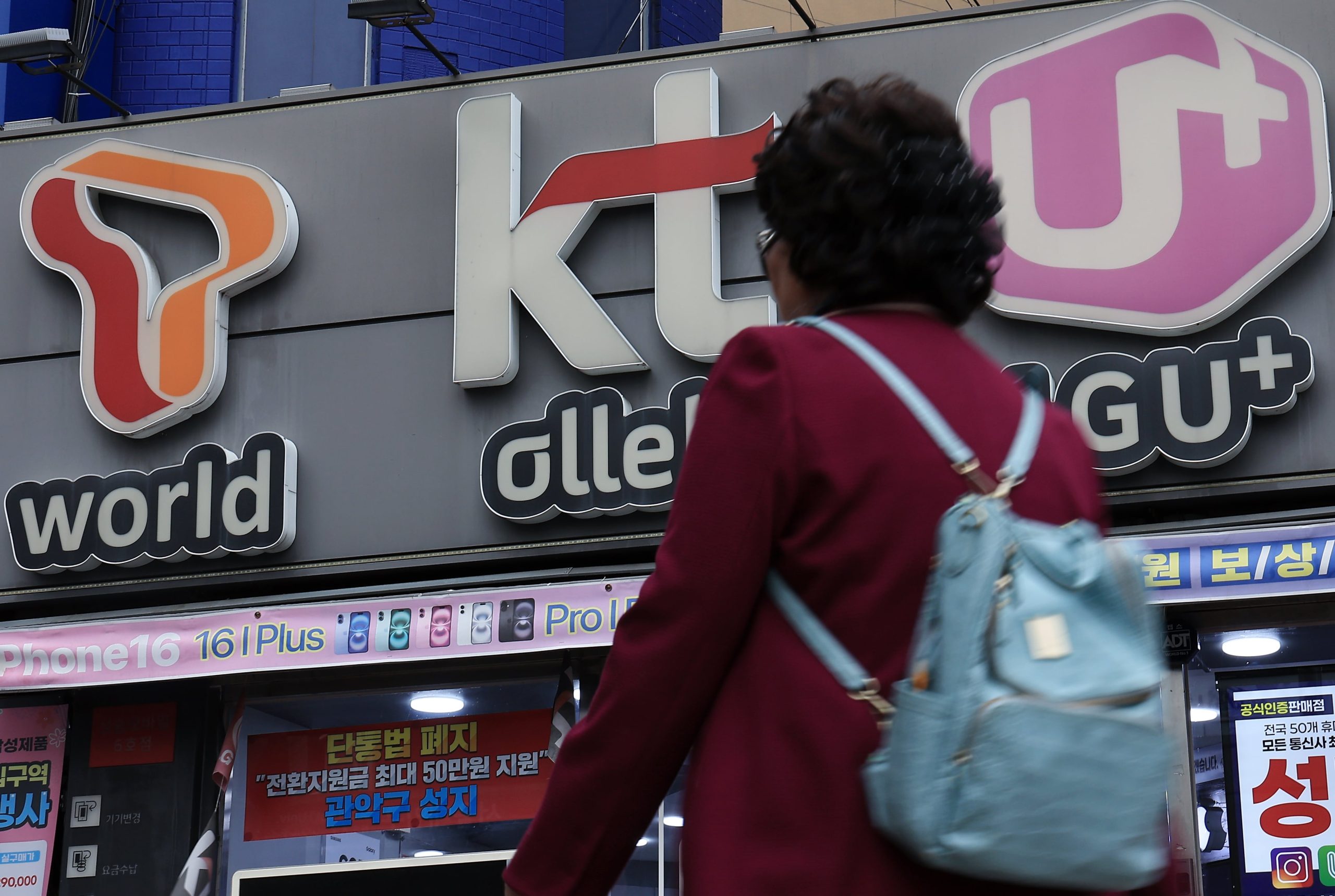
Decline in Operating Profits for South Korean Mobile Carriers
South Korea’s three major mobile carriers experienced a significant drop in their combined operating profits during the third quarter (July–September). This marks the third consecutive quarter where the carriers have reported an operating loss, following the fourth quarter of the previous year.
According to industry sources, the three carriers’ operating profit for the third quarter was approximately 748.3 billion Korean won, which represents a roughly 40% decrease compared to the same period last year. The decline is attributed to various factors, including the aftermath of a major hacking incident at SK Telecom and LG Uplus, as well as the costs associated with voluntary retirement programs.
KT, which had not yet fully accounted for the impact of an unauthorized micro-payment incident, managed to perform relatively better than its competitors. This was largely due to growth in its real estate division and cloud business.
SK Telecom’s Performance
SK Telecom saw a sharp decline in its consolidated operating profit for the third quarter, which stood at 48.4 billion Korean won. This represents a roughly 90.9% decrease from the previous year. The drop was primarily due to compensatory marketing costs, such as the ‘Customer Appreciation Package’ offered to customers affected by the hacking incident.
In August, SK Telecom took steps to mitigate customer dissatisfaction by reducing subscription fees by 50% for all users and providing an additional 50 gigabytes (GB) of data for five months until the end of the year.
LG Uplus’s Challenges
LG Uplus also faced difficulties, with its consolidated operating profit for the third quarter reaching 161.7 billion Korean won—a 34.3% decrease from the previous year. Although the aftermath of SK Telecom’s hacking incident led to an increase in new wireless subscribers, the company incurred one-time personnel costs of 150 billion to 160 billion Korean won in August due to its voluntary retirement program.
KT’s Relative Success
KT announced on the same day that its third-quarter consolidated revenue reached 7.1267 trillion Korean won, with an operating profit of 538.2 billion Korean won. These figures represent increases of 7.1% and 16%, respectively, compared to the same period last year.
KT benefited from the spillover effects of SK Telecom’s hacking incident, while its real estate division, KT Estate, saw a 23.9% increase in third-quarter revenue to 186.9 billion Korean won. Additionally, KT Cloud’s revenue rose by 20.3% to 249 billion Korean won.
Conclusion
The performance of South Korea’s mobile carriers in the third quarter highlights the challenges they face in maintaining profitability amid increasing operational costs and cybersecurity threats. While some carriers managed to offset losses through growth in other sectors, others struggled significantly. The situation underscores the need for continued investment in security measures and strategic diversification to ensure long-term stability in the competitive telecommunications market.