
Strengthening Ties and Securing Critical Minerals
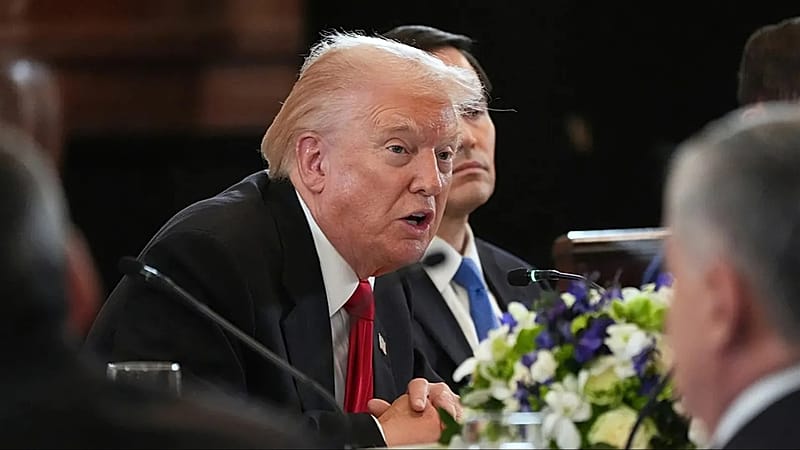
US President Donald Trump met with leaders from five Central Asian countries at the White House, marking a significant step in strengthening economic and security ties. The meeting took place as part of an effort to secure access to rare earth metals, which are essential for high-tech devices such as smartphones, electric vehicles, and fighter jets.
During the visit, Trump held bilateral meetings with officials from Kazakhstan, Kyrgyzstan, Tajikistan, Turkmenistan, and Uzbekistan in the Oval Office before a working dinner. The discussions focused on several key areas, including the importance of critical minerals in global trade and technology.
“One of the key items on our agenda is critical minerals,” Trump stated during the dinner. He emphasized that the US is working to strengthen its economic partnerships, improve security cooperation, and expand overall relations with these nations. “These nations were once home to the ancient Silk Road connecting East and West,” he added, while noting that previous American administrations had neglected this region.
The White House visit came after recent developments in US-China trade relations, particularly regarding the export of rare earth metals. These elements have been a major point of contention between the two countries. Last month, China expanded its export restrictions on vital rare earth elements and magnets. However, following talks between Trump and Chinese President Xi Jinping in South Korea, Beijing announced it would delay its new restrictions by one year.
Washington is now seeking alternative ways to reduce its reliance on China in the critical minerals market. Currently, China controls nearly 70% of the world’s rare earth mining and roughly 90% of global processing. This has prompted the US to look for new sources and partnerships to ensure a stable supply of these essential resources.
Legislative Efforts to Boost Economic Engagement
Secretary of State Marco Rubio welcomed the Central Asian leaders at the State Department on Wednesday, marking the 10th anniversary of the C5+1 initiative. The event aimed to highlight the potential for expanding economic ties between the US and the Central Asian nations.
“We oftentimes spend so much time focused on crises and problems—and they deserve attention—that sometimes we don’t spend enough time focused on exciting new opportunities,” Rubio said. “And that’s what exists here now: an exciting new opportunity in which the national interests of our respective countries are aligned.”
The meetings also occurred after a bipartisan group of senators introduced legislation to repeal Soviet-era trade restrictions. Some lawmakers argue that these outdated regulations are hindering American investment in the Central Asian nations, which gained independence in 1991 following the collapse of the Soviet Union.
A Strategic Focus on Central Asia
According to Trump administration officials, deepening the US relationship with Central Asian countries is a top priority. This commitment was reiterated to the Central Asian officials by US Ambassador to India Sergio Gor, who also serves as Trump’s special envoy to South and Central Asia.
“Your president’s commitment to this region is that you have a direct line to the White House, and that you will get the attention that this area very much deserves,” Gor told the officials.
Central Asia holds vast reserves of rare earth minerals, making the region a strategic partner for the US. The area produces roughly half the world’s uranium, which is crucial for nuclear power production. Despite its resource wealth, the region has long been overshadowed by the influence of China and Russia.
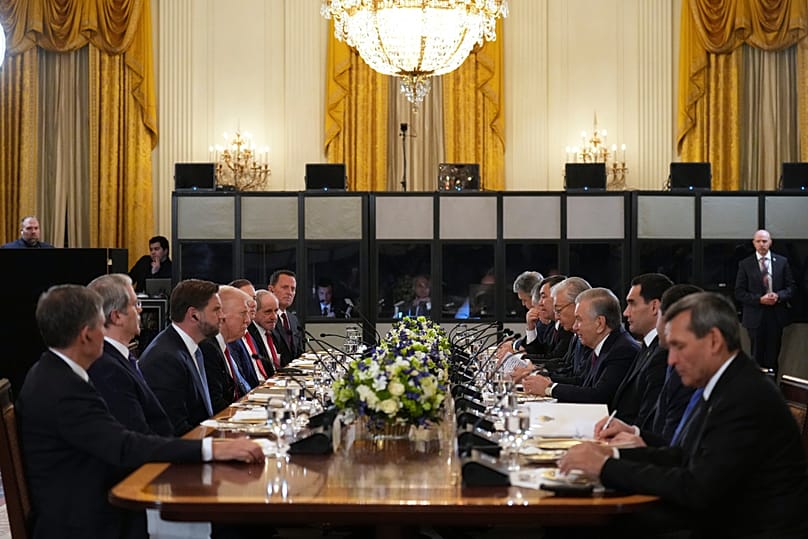
For decades, the C5+1 grouping has primarily focused on regional security, especially in light of the US military presence and subsequent withdrawal from Afghanistan. It has also dealt with concerns over China’s treatment of ethnic Uyghur Muslims in Xinjiang and Russia’s attempts to reassert influence in the region.
Despite these challenges, China and Russia have historically benefited from Central Asia’s mineral exports. In 2023, Kazakhstan shipped $3.07 billion in key minerals to China and $1.8 billion to Russia, compared to only $544 million to the US. This highlights the need for the US to develop stronger economic ties with the region to secure access to critical resources.