
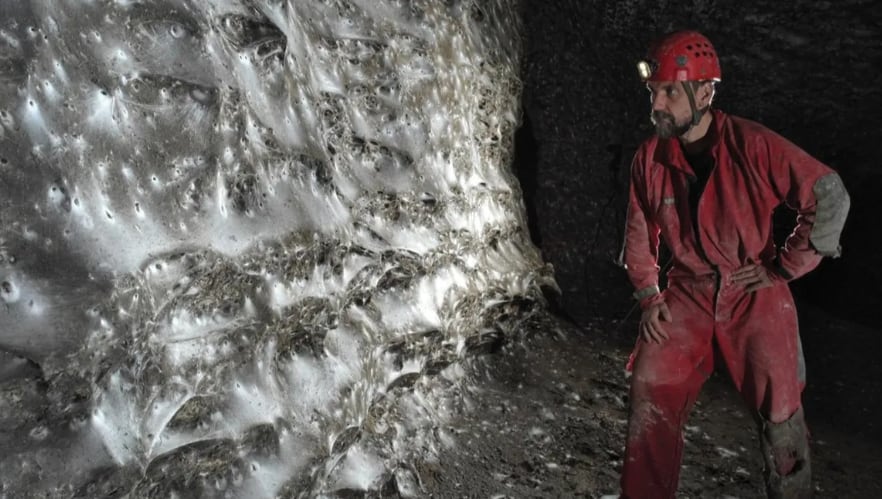
A massive spider web, covering an area of 32 pyeong (approximately 106 square meters), has been found in a sulfur cave located near the border of Greece and Albania. This discovery has captured the attention of scientists and nature enthusiasts alike.
According to a report published by Live Science, a team of researchers led by Professor Istvan Urak from Sapientia-Transylvania Hungarian University recently shared their findings on this extraordinary web in the journalSubterranean Biology. The paper was released on the 17th of last month.
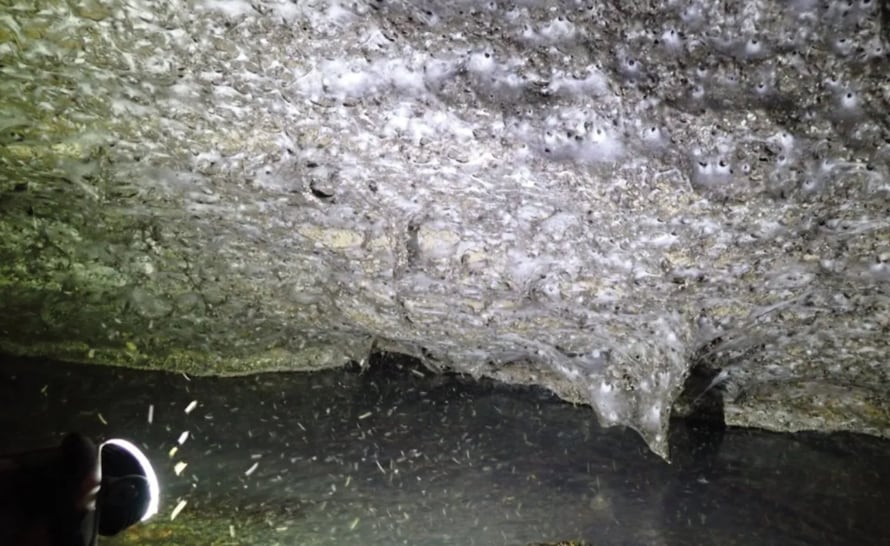
The sulfur cave where the web was discovered is a result of the corrosive effects of sulfuric acid. Inside this dark and challenging environment, the research team uncovered a cluster of thousands of small funnel-shaped webs that have merged together. Stretching across 106 square meters, the web spans from the narrow, low ceiling near the cave entrance along the walls. It is now recognized as the largest spider web ever recorded.
Although the web was initially spotted by the Czech Speleological Society in 2022, it was Professor Urak’s team that first collected samples and conducted detailed research on it.
Inside this massive spider colony, approximately 111,000 spiders of two species were identified. Specifically, 69,000 Jipgakage spiders (Tegenaria domestica) and 42,000 Rinerigone bagans (Prinerigone vagans) were found. These species typically inhabit different environments—houses and wetlands respectively—and are known for their competitive behavior. However, in this unique setting, they have formed a “mega-city” within the cave.
The research team noted that this is the only known instance where two spider species share the same web structure and coexist in such large numbers. Despite their degraded vision due to the absence of light, the spiders seem to have chosen to live together, suggesting a form of cooperation that is rare in their natural habitats.
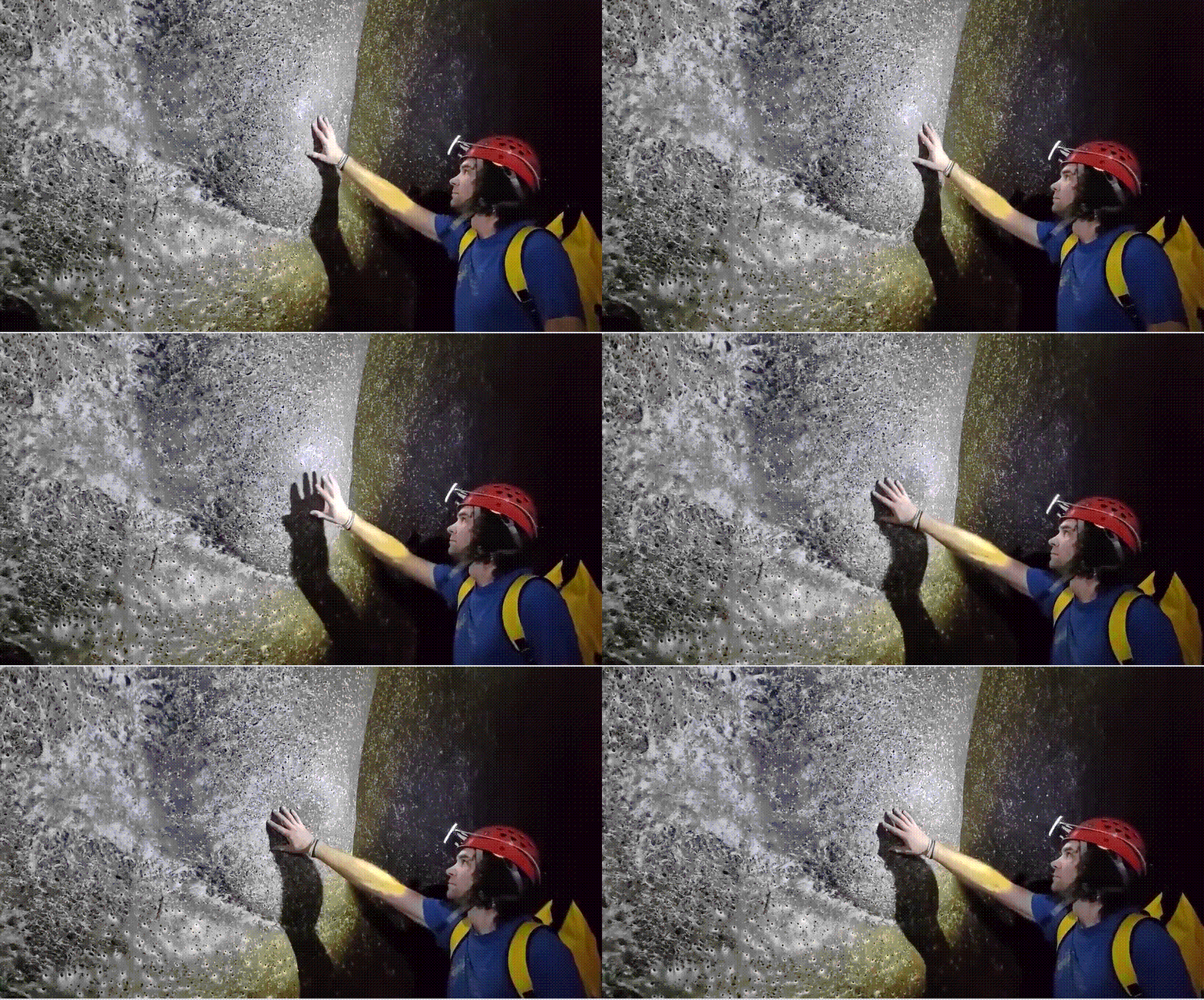
The study also revealed that the spiders living in this cave exhibit genetic differences compared to similar species outside the cave. This indicates that they have adapted to the dark and extreme conditions of their environment. Professor Urak explained, “Some species display remarkable genetic plasticity under extreme conditions,” adding, “Such conditions can lead to behaviors that are rarely observed in normal environments.”
One of the key factors contributing to the high number of spiders in the cave is the unique food chain present there. A sulfur-containing stream at the cave entrance supports microorganisms, which serve as food for gnats. These gnats, in turn, become the primary food source for the spiders, creating a stable ecosystem that sustains the large population.
Given these distinctive features, the research team has emphasized the importance of protecting this spider habitat. They also mentioned that further studies on the giant spider web are currently underway to gain more insights into the ecological dynamics and survival strategies of these fascinating creatures.
This discovery not only highlights the adaptability of life in extreme environments but also underscores the need for continued scientific exploration and conservation efforts in such unique ecosystems.