

Decline in Apartment Move-In Outlook Index
The apartment move-in outlook index for the capital region has seen a significant drop in November. This decline is largely attributed to the government’s ongoing real estate regulations, which have made it more challenging for people to move into new apartments. If this trend continues, the future apartment occupancy rate is expected to be negatively impacted.
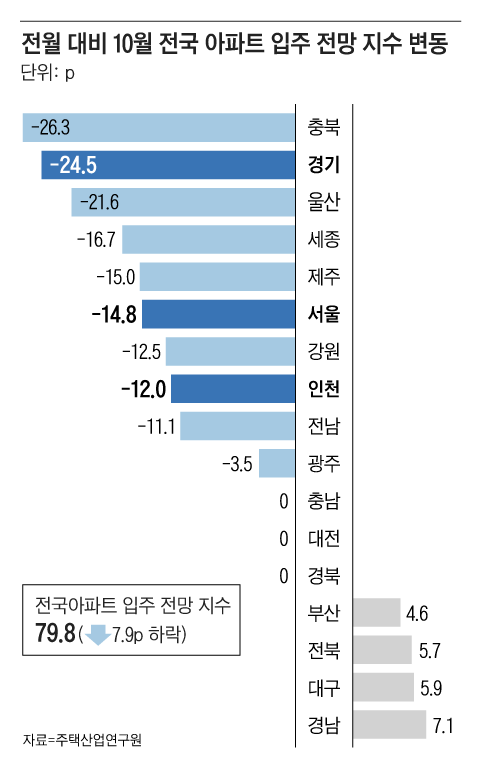
According to a survey conducted by the Korea Housing Institute on housing developers on the 11th, this month’s nationwide apartment move-in outlook index stood at 79.8, a decrease of 7.9 percentage points from last month (87.7). The capital region saw a drop of 17.1 percentage points (92.7 → 75.6), while metropolitan cities fell by 5.2 percentage points (89 → 83.8) and provincial areas decreased by 6.6 percentage points (84.9 → 78.3).
In the capital region, all areas experienced a decline during the same period: Seoul dropped by 14.8 percentage points (100 → 85.2), Incheon fell by 12 percentage points (84 → 72), and Gyeonggi saw a sharp decrease of 24.5 percentage points (94.1 → 69.6).
Impact of New Real Estate Regulations
This decline is primarily due to the October 15 regulations announced just before the survey period (October 20–29). These regulations lowered the limit on mortgage loans for property purchases for high-priced homes and designated all of Seoul and 12 cities and counties in Gyeonggi as regulated or speculative overheating zones. As a result, housing transaction conditions have been significantly restricted.
The measures not only affected areas like Gangnam but also relatively lower-priced outlying areas, increasing the burden on actual demanders and low-income groups struggling to secure remaining payments. Some regions even faced concerns over market disruptions such as delinquencies and contract cancellations.
The Korea Housing Institute noted, “While the rate of apartment price increases in Seoul and major areas has significantly slowed, the upward trend still persists. Given the negative public sentiment regarding the sustainability of policy effects, it is necessary to assess the effectiveness and continuity of these measures.”
Apartment Occupancy Rate Trends
The nationwide apartment occupancy rate in October was 64%, a decrease of 7.2 percentage points from September. Although the capital region saw a 3 percentage point increase (82.9% → 85.9%), the October 15 regulations are expected to change this situation.
If the effects of tightened loan regulations and restrictions on transactions centered on actual demanders take full effect, the capital region’s occupancy rate could also begin to decline. This shift could have broader implications for the real estate market, affecting both buyers and sellers.
Key Takeaways
- Apartment Move-In Outlook Index: The index has declined significantly across the country, with the capital region experiencing the steepest drop.
- Regulatory Impact: Recent real estate regulations have made it harder for potential buyers to secure mortgages, especially in previously less regulated areas.
- Market Concerns: There are growing concerns about market stability, with some regions facing issues like delinquencies and contract cancellations.
- Occupancy Rate Changes: While the capital region saw a slight increase in occupancy, the long-term impact of regulatory changes remains uncertain.
These developments highlight the complex interplay between government policy and real estate market dynamics. As the situation evolves, continued monitoring and analysis will be essential to understand the full extent of these changes on the housing sector.