
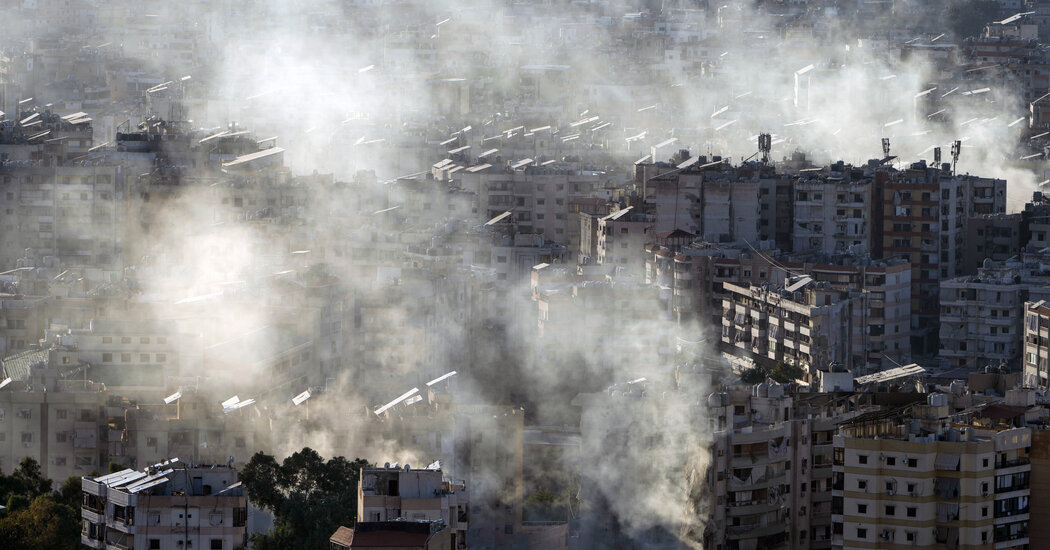
Escalation of Violence in Lebanon Amid Israeli Airstrikes
Cairo, Nov 9 – Three individuals were killed and 11 others injured on Saturday following Israeli airstrikes across various regions of Lebanon, according to Lebanese authorities. The attacks occurred against the backdrop of a significant increase in hostilities, with Israel targeting the Iran-backed Lebanese group Hezbollah.
One of the incidents involved an Israeli drone strike on a vehicle traveling along a road in south-eastern Lebanon, resulting in the deaths of two people. The victims were identified as brothers, and their vehicle was engulfed in flames after the attack, as reported by the Lebanese state news agency NNA.
In another incident, a man was killed and four others were injured when an Israeli drone hit a vehicle in the southern town of Barachit. The Lebanese Ministry of Health provided this information, highlighting the ongoing threat posed by these aerial strikes.
Earlier on Saturday, an Israeli drone targeted a vehicle near a hospital in the southern town of Bint Jbeil, causing injuries to seven individuals, according to the ministry’s statement. These attacks underscore the increasing frequency and intensity of Israeli military operations in the region.
The Israeli military claimed responsibility for the strikes in southern Lebanon, stating that they resulted in the deaths of two “terrorists” who were allegedly involved in smuggling weapons used by Hezbollah. This assertion aligns with Israel’s broader strategy of targeting Hezbollah’s military infrastructure.
On Thursday, Israel announced a series of strikes against Hezbollah military targets in southern Lebanon. These actions reflect the deepening tensions between Israel and the group, despite the existence of a fragile ceasefire agreement.
The ceasefire, which has been technically in place since late November last year, followed months of intense fighting between Israel and Hezbollah. However, the situation remains volatile, as Israel continues to accuse Hezbollah of rearming itself. This has led to a pattern of near-daily Israeli strikes in the region.
Israel, with strong support from the United States, is advocating for the complete disarmament of Hezbollah. This demand is part of a broader regional security strategy aimed at countering perceived threats from Iranian-backed groups.
The recent escalation of violence highlights the precarious nature of the current situation in Lebanon. As both sides continue to engage in military actions, the risk of further casualties and instability grows. The international community remains closely watching the developments, with concerns about the potential for wider regional conflict.
Key Incidents and Responses
- South-eastern Lebanon: An Israeli drone struck a vehicle on a road, killing two brothers. Their vehicle caught fire following the attack.
- Barachit: A man was killed and four others injured after an Israeli drone hit a vehicle in the southern town of Barachit.
- Bint Jbeil: A drone strike near a hospital in the southern town of Bint Jbeil resulted in seven injuries.
- Israeli Military Claims: The Israeli military stated it killed two “terrorists” involved in smuggling weapons used by Hezbollah.
- Hezbollah Accusations: Israel accuses Hezbollah of rearming, leading to continued strikes despite the ceasefire.
Ongoing Tensions and Regional Implications
The recent violence underscores the fragile state of the ceasefire between Israel and Hezbollah. While the agreement was intended to prevent further conflict, it has not been effective in curbing the activities of Hezbollah. The group continues to operate in southern Lebanon, and Israel remains determined to neutralize its military capabilities.
This situation is compounded by the involvement of external powers, particularly the United States, which supports Israel’s stance on disarming Hezbollah. The geopolitical implications of this conflict extend beyond the immediate region, affecting stability and security across the Middle East.
As the situation evolves, the international community faces the challenge of finding a sustainable solution to the ongoing tensions. The safety of civilians and the prevention of further bloodshed remain critical priorities for all stakeholders involved.