
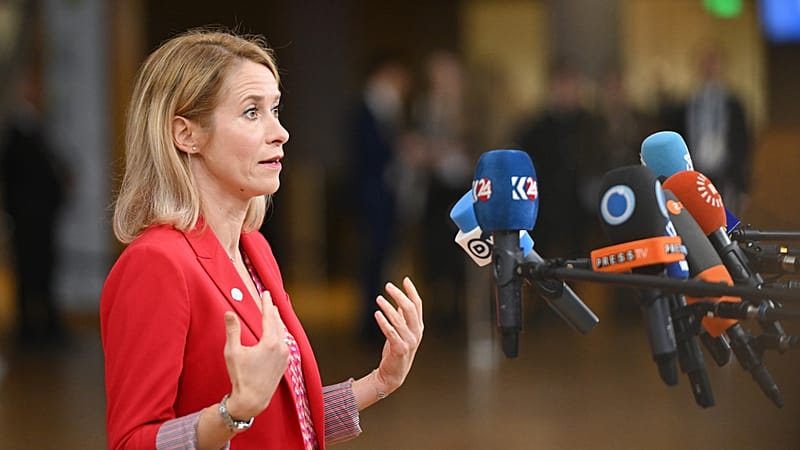
The European Union (EU) has reaffirmed its commitment to international law, emphasizing that the use of force is permissible only in cases of self-defense or under United Nations (UN) mandates. This statement was made by the EU’s foreign policy chief, Kaja Kallas, as European and Latin American leaders gathered in Colombia for the fourth CELAC-EU summit. The event took place amid growing concerns over recent US military actions targeting alleged narco-boats in the Caribbean.
Kallas addressed the issue during her arrival at the summit, highlighting the clear framework established by international law. “Well, international law is very clear on that. You can use force for two reasons: one is self-defence, the other one is the UN Security Council resolution,” she stated.
Outgoing Dutch Prime Minister Dick Schoof called for restoring calm in the Caribbean Sea and urged leaders to work towards reducing tensions. Mexican Foreign Secretary Juan Ramon de la Fuente emphasized Mexico’s stance, which seeks to respect “sovereignty of peoples and their self-determination.”
Colombian President Gustavo Petro criticized the violence, describing the deaths as “extrajudicial executions” and identifying at least one casualty as a Colombian citizen. In his opening remarks, he questioned the purpose of the meeting in a world marked by conflict. “What are we doing with this meeting in today’s world amidst missiles?” he asked, expressing hope that the summit would serve as “a beacon of light amidst the barbarity.”
Following Petro’s comments, several leaders highlighted the growing trade relations between Europe and Latin America, as well as joint progress in areas such as digital connectivity, the green transition, social development, and artificial intelligence.
“We choose dialogue, not division; we choose cooperation, not confrontation; we choose partnership, not isolation. And in this multipolar world of ours, what is needed is a multilateral response,” said European Council President António Costa. His remarks did not directly address the recent attacks on vessels.
The Trump administration has consistently denied allegations that the strikes on narcoboats constitute extrajudicial killings. US Defence Secretary Pete Hegseth stated that Washington has carried out approximately 18 boat strikes since September. Reports indicate that at least 70 people have been killed in attacks on suspected drug-smuggling vessels.
“To all narco-terrorists who threaten our homeland: if you want to stay alive, stop trafficking drugs. If you keep trafficking deadly drugs – we will kill you,” Hegseth said in a post on X on Friday.
The two-day summit brought together representatives from 60 countries across Europe, Latin America, and the Caribbean to discuss trade, climate change, migration, and security cooperation. CELAC, established in 2010, represents 33 Latin American and Caribbean nations.
European participation in the summit was notably lower than in previous years, with notable absences including European Commission President Ursula von der Leyen and German Chancellor Friedrich Merz.
Historically, CELAC has faced internal divisions, with right-leaning governments occasionally boycotting meetings when leftist leaders held dominance within the organization. The United States is not a participant in the summit.