
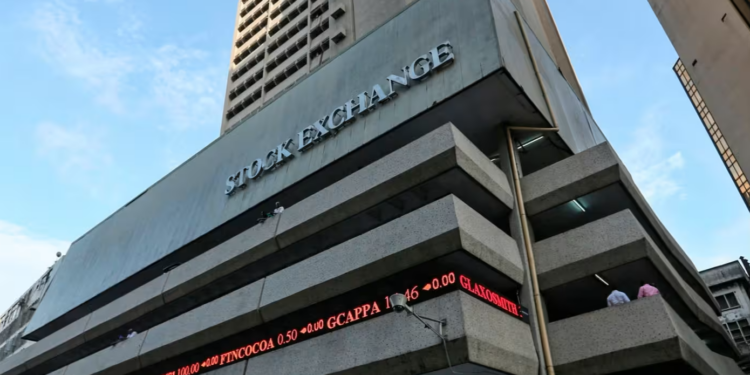
Nigerian Exchange Leads Africa’s Islamic Finance Growth
The Nigerian Exchange Limited (NGX) has reinforced its position as a key player in advancing Africa’s Islamic finance ecosystem. This is achieved through the strategic expansion of its Non-Interest Finance Board and active participation in the 7th African International Conference on Islamic Finance (AICIF), which took place in Lagos from November.
Organized by The Metropolitan Skills Limited in collaboration with the Securities and Exchange Commission (SEC), the conference brought together policymakers, regulators, development partners, and market participants. The event focused on policy reforms, product innovation, and strategies to unlock liquidity across Africa’s Islamic finance markets. NGX is working to increase access to Sharia-compliant products and support Nigeria’s emergence as a regional hub for ethical and sustainable investing.
At the conference, Group Chairman of the Nigerian Exchange Group (NGX Group), Alhaji (Dr.) Umaru Kwairanga, emphasized that the Non-Interest Finance Board has become a central platform for expanding access to Sharia-compliant financial instruments. He stated, “Through the Non-Interest Finance Board, NGX is building a dedicated platform for Sukuk, Islamic collective investment schemes, and non-interest exchange-traded funds.” Dr. Kwairanga added, “Our goal is to broaden market participation while channeling capital towards productive sectors of the economy.”
Currently, NGX hosts over N1.3 trillion in listed Sukuk, reflecting growing investor interest in assets that deliver both financial returns and social impact. In collaboration with the SEC and the National Insurance Commission (NAICOM), NGX continues to strengthen governance frameworks and deepen the non-interest capital market to attract a broader base of ethical investors.
Also speaking at the conference, Chief Executive Officer of NGX, Mr. Jude Chiemeka, highlighted the strategic role of non-interest finance in driving sustainable economic transformation and enhancing market inclusion. “At NGX, our Non-Interest Finance Board represents more than a platform; it embodies our commitment to unlocking ethical capital, diversifying investment opportunities, and driving sustainable development,” said Chiemeka. “By leveraging innovation and strategic partnerships, we are creating pathways for inclusive growth and positioning Nigeria at the forefront of Islamic finance in Africa.”
Vice President Kashim Shettima, represented by Dr. Tope Fasua, Special Adviser to the President on Economic Matters, described Islamic finance as a credible mechanism for fostering equitable prosperity and sustainable development. He urged broader adoption across African economies.
Nigeria’s non-interest capital market has seen significant expansion in recent years, with sovereign Sukuk issuances raising over N1.4 trillion to fund multiple projects nationwide. The segment continues to play a pivotal role in mobilizing long-term, low-cost capital for infrastructure and sustainable development, underscoring Nigeria’s growing influence in shaping the future of Islamic finance across Africa.
Key Developments in Islamic Finance
- Sukuk Market Expansion: NGX currently hosts over N1.3 trillion in listed Sukuk, indicating strong investor confidence in Sharia-compliant financial instruments.
- Strategic Partnerships: NGX collaborates with the SEC and NAICOM to enhance governance frameworks and deepen the non-interest capital market.
- Innovation and Inclusion: The Non-Interest Finance Board is not just a platform but a commitment to ethical capital and sustainable development.
- Economic Impact: Sovereign Sukuk issuances have raised over N1.4 trillion, supporting infrastructure and sustainable projects nationwide.
Future Outlook
As Nigeria continues to develop its non-interest capital market, the country is poised to play a leading role in Africa’s Islamic finance sector. With ongoing efforts to improve transparency, inclusivity, and sustainability, NGX is helping to shape a financial landscape that aligns with ethical and economic goals.