
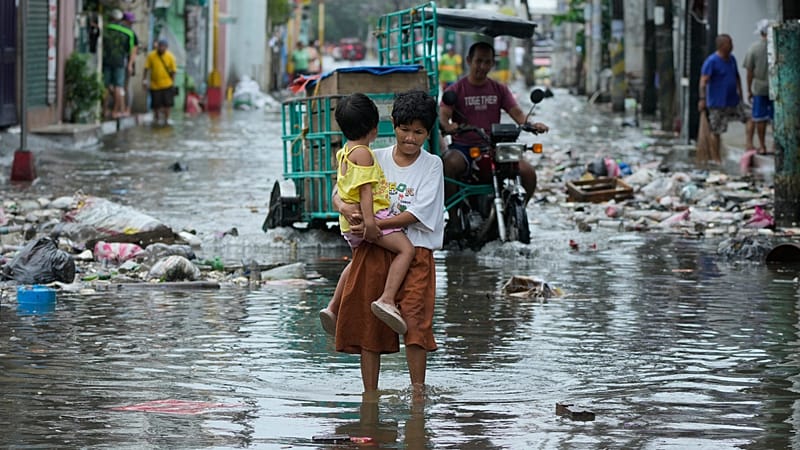
Typhoon Fung-wong, a powerful storm that made landfall in Aurora province on Sunday night, has left a trail of destruction across the Philippines. At least four people lost their lives, and over 1.4 million residents were evacuated as the super typhoon brought heavy rains, strong winds, and flooding to various parts of the country. The Office of Civil Defence reported that more than 30 million people were exposed to potential hazards during the storm’s passage.
In Catanduanes province, one person drowned in flash floods, while another died in Catbalogan City when her house collapsed under the weight of the storm. In Nueva Vizcaya province, two landslides in the towns of Kayapa and Kasibu claimed the lives of three children and injured four others, according to local police.
The typhoon, which stretched over 1,800 kilometers in width, weakened as it moved through mountainous northern provinces and agricultural plains overnight. It eventually entered the South China Sea from La Union province, as reported by state forecasters. When it struck the eastern town of Dinalungan, Fung-wong had sustained winds of up to 185 kph, with gusts reaching as high as 230 kph.
This event occurred just days after Typhoon Kalmaegi, which had already caused the deaths of 224 people in the country. The back-to-back storms have placed immense pressure on emergency response teams and local authorities.
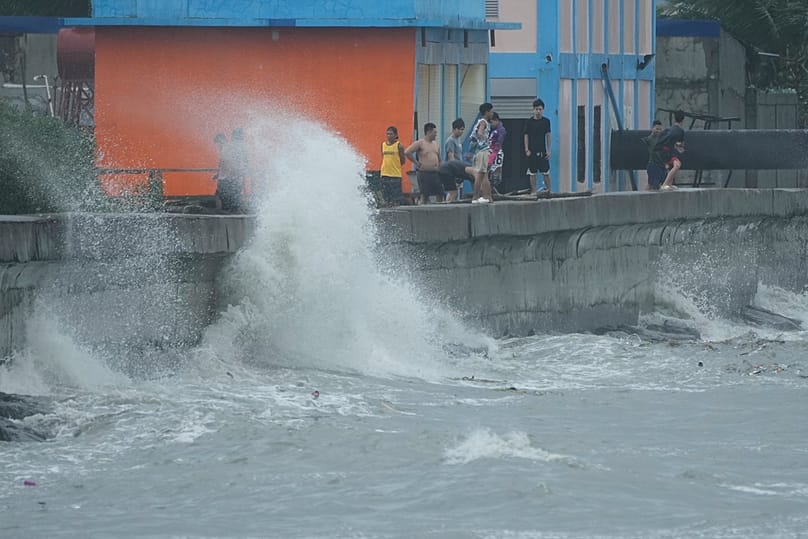
President Ferdinand Marcos Jr. declared a state of emergency on Thursday due to the devastation caused by Typhoon Kalmaegi and the anticipated damage from Fung-wong. Locally known as Uwan, the storm has been a significant threat to communities across the region.
Following the storm’s impact, authorities ordered the closure of schools and most government offices on Monday and Tuesday. Fierce winds and heavy rainfall triggered widespread flooding in at least 132 northern villages, with some residents trapped on rooftops as water levels rose rapidly.
The disruption extended to air travel, with more than 325 domestic and 61 international flights cancelled over the weekend. Additionally, around 6,600 commuters and cargo workers were stranded in ports after the coast guard banned ships from venturing into the rough seas.
Key Details About Typhoon Fung-wong
- The storm was classified as a super typhoon due to its sustained winds of 185 kph or higher.
- Super typhoons are among the most intense tropical cyclones, often causing catastrophic damage.
- The Philippines experiences approximately 20 typhoons and storms each year, making it one of the most disaster-prone countries globally.
Additional Context
The country is also home to more than a dozen active volcanoes, further increasing the risk of natural disasters. Despite the severity of the situation, Manila has not officially requested international assistance following the devastation caused by Typhoon Kalmaegi. However, officials noted that the United States and Japan have expressed willingness to provide support if needed.
As the nation continues to recover from the impacts of these powerful storms, the importance of preparedness and resilience becomes increasingly evident. The ongoing efforts of local authorities, emergency responders, and communities will be crucial in mitigating the long-term effects of such extreme weather events.