
The Nepali Congress and the Gen Z Movement
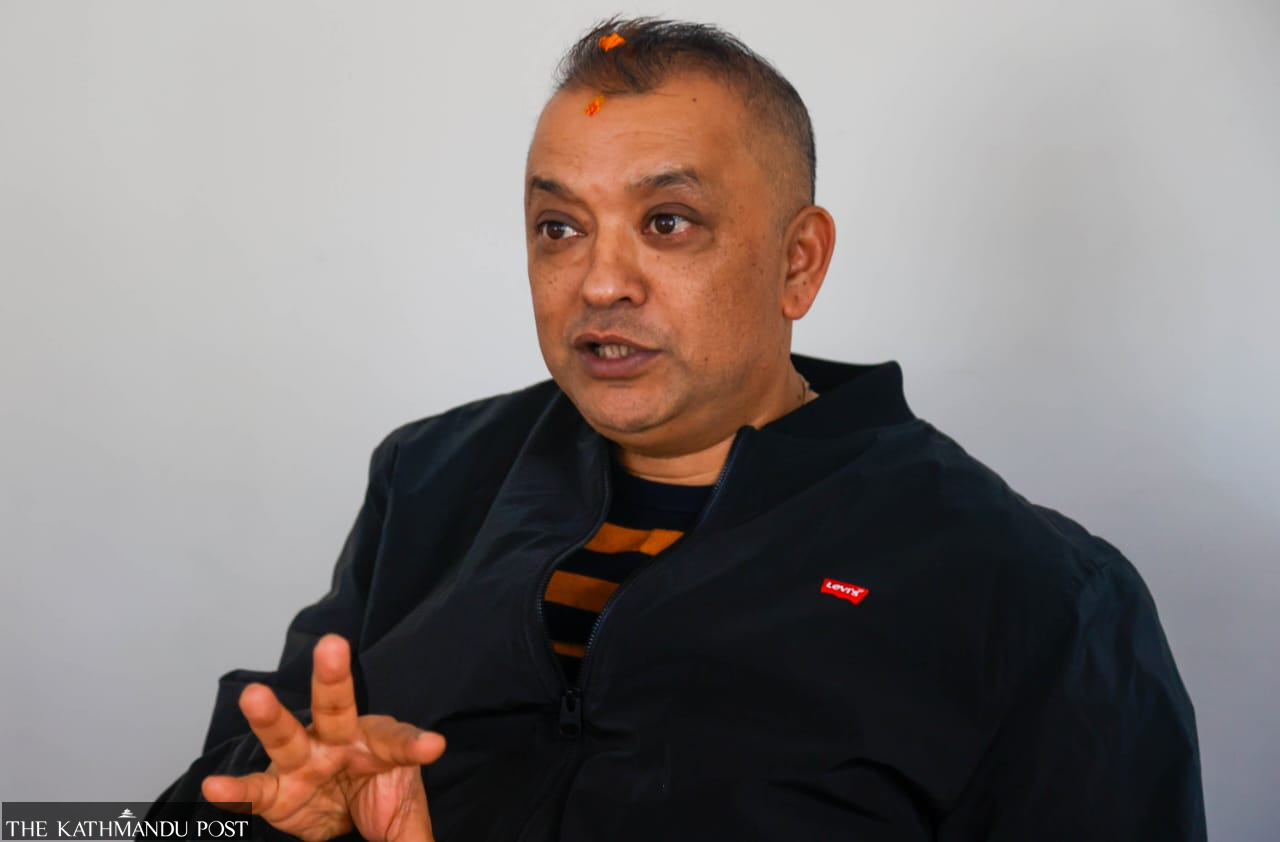
In the wake of the Gen Z movement, the Nepali Congress appears to be the only mainstream party that has partially embraced the movement’s spirit. However, the party is currently facing internal challenges as its central committee meeting has extended for over 23 days. Gagan Thapa, the general secretary of the Congress, discussed various topics with reporters, including the party’s general convention, the Gen Z movement, the former Oli government, the current interim government, and the path forward.
The Gen Z movement sparked hopes for significant reforms within the Nepali Congress. However, these expectations have not materialized. From an external perspective, the party may seem to be riddled with problems. Yet, the core issue lies in determining the date for the next party convention. The delay in setting a date has led to various other issues within the party.
Why Hold the Convention Now?
The party had planned to hold the convention soon, as per its statutes, by next year. The Gen Z movement in early September highlighted public anger and frustration, particularly regarding corruption and good governance. The Congress has acknowledged some lapses from the old guard. However, a comprehensive discussion requires a convention.
The party plans to hold the convention within the next one and a half months. This is due to the need for coordination between Gen Z leaders, the interim government, and political parties. Holding the convention now would not be feasible, as the party needs time to prepare. There is still infighting within the party, and some leaders remain resistant to the idea that the protests were against them. The focus should be on the March elections.
Political Parties and the Parliamentary System
Political parties are essential to a parliamentary system. Procrastinating on elections and deviating from the changes demanded by the people risks losing both the party and the national interest. The Gen Z movement called for the replacement of the heads of the three mainstream parties—Sher Bahdur Deuba, KP Oli, and Pushpa Kamal Dahal. If the other two parties do not bring about change, the Congress should take the initiative. People will question the party if it cannot change its president in two months.
Party Unity and the Convention
The party collected signatures from around 54% of convention representatives demanding a convention. This is not an attempt to split the party. If there is support from a majority of convention representatives, why would they want to form another party? While the old guard may not support the younger leaders, the grassroots level shows strong support through the signature campaign.
The old guard still claims that younger leaders are media creations, but the convention representatives were chosen by them and are with the younger leaders. There is no need to split the party. A majority supports the younger leaders, and they aim to bring about positive changes. An ultimatum has been given: the convention must be held by mid-January.
Election Tickets and Leadership
There is an open secret that party chiefs have been distributing tickets to their own people. However, the claim that the general secretaries are pushing for a change in leadership to gain a say in ticket distribution is baseless. As general secretaries, they still have a say in ticket distribution.
Another challenge is who will try to get tickets from the Congress in the upcoming elections. In the current circumstances, the party might have to request people to contest elections from the Nepali Congress.
Presidential and Prime Ministerial Candidates
The race for the next Congress president also involves the possibility of distributing election tickets. The candidate for either post aims to reform the party. As long as a new generation of leaders gets a chance to lead, it does not matter which one leads the party while the other leads in the parliament.
Expected Outcomes from the Convention
The convention is expected to bring a change in the top leadership of the Congress, liberating it from the stagnation of the old leadership. Holding the convention before the elections is crucial. It will send a message to voters that the current era of the Congress is over, and a new chapter has started.
The Congress has historically taken the lead in democratic movements in Nepal. The Gen Z movement, however, seemed to be against the party. Through the convention, the party will get a new leadership that ensures it is never associated with corruption and bad governance again.
New policy measures will be introduced to reform the party. The politicisation of public bodies and the politics of spoils-sharing must be stopped. The party has transformed into an election machine, ready to form a coalition government with any other party. This practice has influenced the younger generation’s perspective of the party. At the very least, the public perception needs to change.
Prolonged Central Committee Meeting
The traditional practice in the Congress is that the party president presents proposals in the meeting, which are supported by an overwhelming majority of the central committee. The current situation is different. First, the party president is not present in the meeting. Second, the president’s proposals are not clear. This has prolonged the central committee meeting.
Social Media Ban and Freedom of Expression
The social media ban by the Oli government partly sparked the Gen Z protests. The recent ban was not the first of its kind proposed by an Oli-led government. In 2019, Oli presented the IT Bill at parliament, introducing stringent rules for social media users. The bill was shelved after widespread backlash. The entire angle and approach of the bill was wrong. It seemed Oli was in a mood to silence his critics. Only authoritarian leaders undermine freedom of expression.
The Nepali Army and the Protests
The interim government has formed an inquiry panel to investigate the events of September 8 and 9. There is some space to question the intention of the army, but the situation was such that they had to make an emergency decision. The report of the investigation is awaited.
Security Agencies and the Protests
The security forces anticipated the scale of the protests and tried to communicate it to former PM Oli and his team. However, Oli turned a deaf ear to the concerns raised by the agencies. Political leaders are responsible for this as well.
Changing Views Within the Congress
From our side, we are doing two things simultaneously. First, reaching out to such leaders on a personal level. We are meeting such leaders and trying to make them understand the spirit of the movement. And this has resulted in some leaders changing their position. Second, we are reaching out to professionals and intellectuals in the circles of such leaders. We are trying to convince such individuals to convince those leaders.
Formation of the Interim Government
Immediately after the incident, we met with President Ramchandra Paudel and proposed a meeting of the HoR, at least for an hour, in order to untie the knots of the constitution to legitimise the appointment of former Chief Justice Sushila Karki as the prime minister. The Gen Z representatives, however, did not accept the proposal. In a literal way, the interim government is unconstitutional. But the doctrine of necessity sometimes lands us in such a situation.
Approach to the March 5 Elections
There is no alternative to an election. The interim government has understood this. The NC is also 100 percent committed to the elections. We also hope that the UML will gradually understand this and contest the elections. The interim government must expedite the process to forge a political consensus on the elections.
Responsibility for the Elections
Both the NC and UML must accept that the prison breaks took place while we were in power. But that does not mean that we are to be blamed solely for the incidents.
Gen Z Movement and Regime Change
The Gen Z movement has not set a wrong precedent for regime change via protests. The incident of September 8 was the biggest suppression of democracy in the history of democratic Nepal. The killing of 19 individuals in one day by the state’s security agencies posed a big moral question before the head of government. If I were the prime minister during that incident, I would have resigned immediately.
After the Elections
Even if the elections are held on March 5, a question remains: What after that? The elections are held on March 5. Say, the UML also decides to contest the elections, like the NC and the other communists. A new parliament is formed. So what? What would this parliament have to do? I think the way forward will be to forge a national consensus via the process of dialogue.
Creating a Charter for Change
The political parties were in a similar situation after the events of 2005-06. The civil society had urged the political parties to bring about positive changes. The changes that we brought about—inclusion, federalism, and all other progressive changes—were not simply through the constitution. We realised that just using the Westminster form of political system was not enough.
We need a similar charter now. What are the reforms that the parliament must make after the elections? If the agenda of anti-corruption is to be taken seriously, we must now envision the changes in our anti-graft body, the Commission for the Investigation of Abuse of Authority. Nepal’s constitution is the only one in our region which has a basis for the creation of such a body. It was our fault that such a body was politicised. Now we need broader consensus on what can be done to depoliticise the body.
If it is to be formed by the constitutional council, it will always be a victim of politics. We need tangible change. The new parliament must make constitutional amendments to reform the CIAA. And the charter that envisions that change must be created now. People are watching. This is the one opportunity to bring about a significant change. We must not miss it.