
LG Electronics Expands HVAC Solutions for Nuclear Power Plants
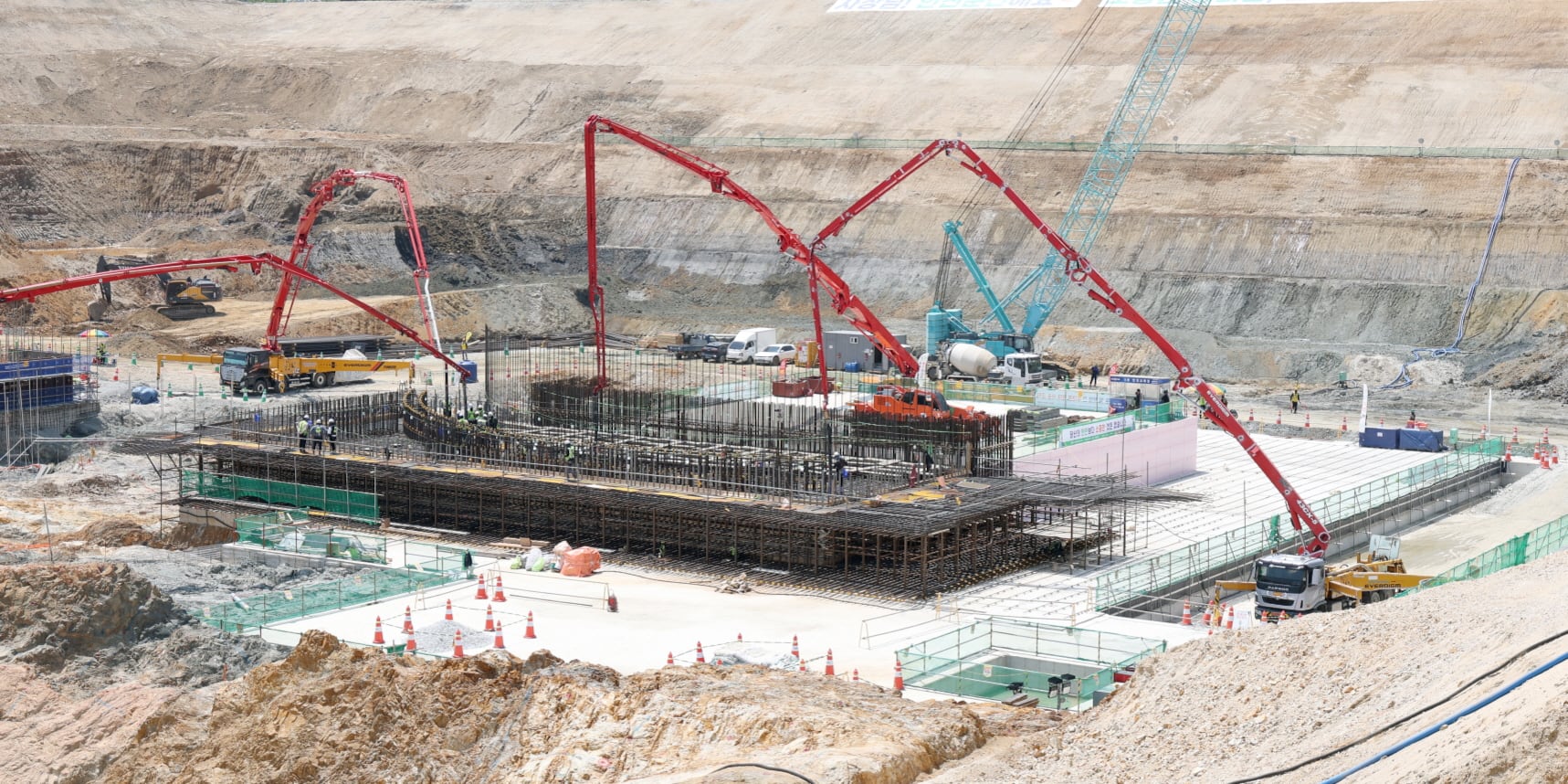
LG Electronics is reportedly supplying a range of HVAC (heating, ventilation, and air conditioning) solutions for Shin Hanul Units 3 and 4, a nuclear power plant currently under construction in Uljin, North Gyeongsang Province. The project includes a large-scale chiller, an air handling unit (AHU), an air cleaner (ACU), and a blower, all designed to regulate indoor environments and ensure clean air supply. These products are scheduled to be delivered sequentially starting next year, with the contract amount reaching 37 billion Korean won.
Korean home appliance companies are increasingly focusing on domestic and international markets by offering HVAC technologies capable of functioning in extreme environments. HVAC systems play a critical role in controlling temperature, humidity, and air quality in large buildings such as factories and hospitals. With the surge in AI data center construction, which generates significant heat continuously, HVAC has gained even more attention. Companies like Samsung Electronics and LG Electronics are pushing forward with technologies that can withstand extreme conditions, including those found in nuclear power plants.
Custom Design for Nuclear Accidents
Nuclear power plants represent some of the most extreme environments, requiring HVAC systems to operate under harsh conditions such as earthquakes and potential accidents. The seismic design standard for Shin Hanul Units 3 and 4 is set at a magnitude of 7.0 on the Richter scale. LG Electronics plans to provide HVAC solutions that can endure such conditions.
Customized designs are essential for nuclear power plants, as they must account for unique characteristics. For example, the air cleaner (ACU) must be able to adsorb radioactive materials or harmful gases in case of leaks. It must also efficiently cool the heat generated in reactor containment and auxiliary buildings. Industry sources emphasize that HVAC systems in nuclear power plants must demonstrate normal operation under various simulated accident conditions through extensive simulations and experiments. This requires not only advanced technology but also extensive experience and expertise due to the numerous and complex performance verification requirements.
To strengthen its chiller business for nuclear power plants, LG Electronics established the “Chiller Nuclear Development Project” team in 2021. The company has been conducting customized designs tailored to the specific conditions of power plants. Through these efforts, LG has successfully supplied cooling solutions to domestic projects like Shin Kori Units 5 and 6, as well as international projects such as India’s Kudankulam Units 1 and 2, and the UAE’s Barakah Nuclear Power Plant Units 1–4. Recently, LG completed the delivery of refrigeration and air conditioning units worth $34 million (approximately 49.8 billion Korean won) for India’s Kudankulam Units 3 and 4. The company is also responding to performance verification standardization in the next-generation small modular reactor (SMR) sector.
Beyond nuclear power plants, LG Electronics is researching HVAC technologies optimized for extreme heat environments, including arid desert regions and hot, humid tropical areas.
Samsung’s Extreme Environment Testing
Samsung Electronics recently completed the acquisition process of Germany’s Flakt Group, the largest air conditioning equipment company in Europe. This move allows Samsung to fully expand its HVAC business. The company aims to develop HVAC technologies applicable to various environments, including AI data centers, tunnels, ships, and defense purposes, leveraging Flakt’s core infrastructure. Tunnels and ships require stringent conditions that differ from general buildings.
To advance HVAC technology development, Samsung recently established the “Samsung HVAC Test Lab” in Asahikawa, Hokkaido, Japan’s northernmost region. Asahikawa experiences harsh winter conditions with minimum temperatures below -20°C and monthly snow accumulation of up to 127 centimeters. Samsung plans to use this extreme climate to verify heating and cooling systems, particularly focusing on frost removal on heat exchangers in heating and cooling units. Samsung Electronics stated, “We will develop products with enhanced performance by conducting various verifications at the HVAC Test Lab.”